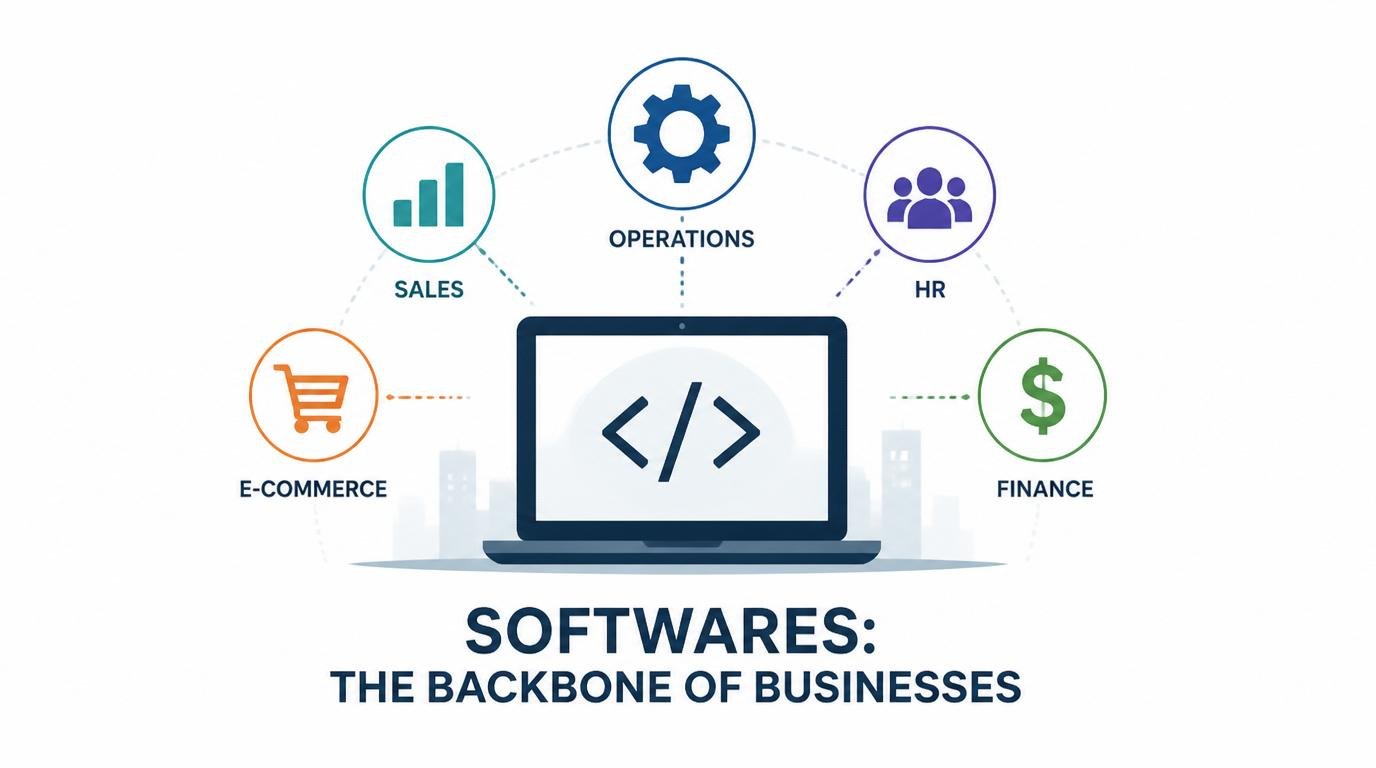
Softwares: The Backbone of Businesses.
In today’s digital world, software has become the foundation of almost every business operation. From small startups to multinational corporations, software helps organizations manage work, increase productivity, improve communication, automate tasks, and deliver better services to customers. Without software, modern businesses would struggle to compete in a fast-moving and technology-driven marketplace.
Software is no longer limited to computers alone. It powers smartphones, online platforms, banking systems, educational portals, hospitals, factories, e-commerce stores, transportation systems, and even smart homes. It has transformed the way people learn, work, communicate, and earn money.
This article explores software in detail, including its types, categories, elements, uses, advantages, and how it is empowering businesses, education, automation, accounting, and online opportunities worldwide.
What is Software?
Software is a collection of programs, instructions, and data that tells a computer or digital device how to perform specific tasks. Unlike hardware, which refers to physical components such as keyboards, monitors, and processors, software is intangible and works behind the scenes to make systems functional.
Software acts as the brain of digital systems. It helps users interact with computers and enables businesses to perform operations efficiently and accurately.
Importance of Software in Businesses
Software is considered the backbone of businesses because it supports nearly every business function. It helps organizations:
- Store and manage data
- Automate repetitive tasks
- Improve communication
- Increase productivity
- Reduce operational costs
- Enhance customer service
- Analyze performance and reports
- Secure important information
- Enable remote work and collaboration
Businesses today rely on software for decision-making, marketing, sales, accounting, project management, customer support, and much more.
Main Types of Software
Software can be divided into several major categories based on its purpose and functionality.
1. System Software
System software manages computer hardware and provides a platform for running applications.
Examples:
- Operating Systems
- Device Drivers
- Utility Programs
Popular Operating Systems:
- Microsoft Windows
- macOS
- Linux
- Android
- iOS
Functions:
- Controls hardware resources
- Manages memory and storage
- Runs applications
- Provides security and system stability
Without system software, computers and digital devices cannot function properly.
2. Application Software
Application software is designed to help users perform specific tasks.
Examples:
- Word processors
- Web browsers
- Video editing tools
- Accounting software
- Graphic design applications
Common Uses:
- Creating documents
- Managing finances
- Editing photos and videos
- Conducting online meetings
- Running online businesses
Application software is the most visible form of software used by individuals and organizations daily.
3. Programming Software
Programming software helps developers create, test, and maintain applications.
Examples:
- Code editors
- Compilers
- Debuggers
- Integrated Development Environments (IDEs)
Popular Tools:
- Visual Studio Code
- PyCharm
- Eclipse
- IntelliJ IDEA
Programming software is essential for software development and innovation.
Categories of Business Software
Businesses use different categories of software depending on their needs and industries.
1. Accounting Software
Accounting software helps businesses manage financial operations efficiently.
Features:
- Bookkeeping
- Invoice generation
- Tax calculation
- Payroll management
- Expense tracking
- Financial reporting
Benefits:
- Reduces human errors
- Saves time
- Improves financial accuracy
- Helps with tax compliance
Popular Examples:
- QuickBooks
- Tally
- Zoho Books
- FreshBooks
Accounting software has revolutionized financial management for businesses of all sizes.
2. Customer Relationship Management (CRM) Software
CRM software helps businesses manage customer interactions and relationships.
Features:
- Customer data management
- Sales tracking
- Lead generation
- Marketing automation
- Customer support integration
Benefits:
- Improves customer satisfaction
- Increases sales efficiency
- Enhances communication
Popular Examples:
- Salesforce
- HubSpot
- Zoho CRM
CRM systems help companies build stronger customer relationships and increase business growth.
3. Enterprise Resource Planning (ERP) Software
ERP software integrates multiple business processes into a single system.
Functions:
- Inventory management
- Human resources
- Finance management
- Supply chain operations
- Procurement
Benefits:
- Centralized data management
- Better coordination between departments
- Improved decision-making
Popular ERP Solutions:
- SAP
- Oracle ERP
- Microsoft Dynamics
ERP systems are commonly used by large organizations to streamline operations.
4. Project Management Software
Project management tools help teams organize tasks and collaborate effectively.
Features:
- Task assignment
- Progress tracking
- Team collaboration
- Deadline management
- Reporting dashboards
Popular Tools:
- Trello
- Asana
- Monday.com
- Jira
These tools improve productivity and ensure projects are completed on time.
5. Communication Software
Communication software enables teams and customers to connect instantly.
Examples:
- Video conferencing apps
- Messaging platforms
- Email services
Popular Platforms:
- Zoom
- Microsoft Teams
- Slack
- Google Meet
Communication software became especially important during remote work and online learning growth.
6. E-Commerce Software
E-commerce software powers online stores and digital marketplaces.
Features:
- Product listings
- Shopping carts
- Payment gateways
- Order tracking
- Customer management
Popular Platforms:
- Shopify
- WooCommerce
- Magento
This software has enabled businesses to sell products globally through the internet.
Essential Elements of Software
Every software system contains several important elements.
1. User Interface (UI)
The user interface is the visual part users interact with.
Includes:
- Buttons
- Menus
- Icons
- Forms
- Dashboards
A good UI improves user experience and accessibility.
2. Database
Databases store and organize information securely.
Examples:
- Customer records
- Financial data
- Product inventories
Popular databases include:
- MySQL
- PostgreSQL
- MongoDB
3. Backend Logic
The backend handles processing, calculations, and system operations behind the scenes.
Functions:
- Data processing
- Authentication
- Business logic
- Server communication
4. Security System
Security is a critical software component.
Includes:
- Encryption
- Password protection
- Firewalls
- Access control
- Data backup
Cybersecurity software protects businesses from hacking, fraud, and data breaches.
5. APIs (Application Programming Interfaces)
APIs allow different software systems to communicate with each other.
Examples:
- Payment gateway integration
- Social media login
- Cloud storage connection
APIs improve software flexibility and functionality.
How Software is Empowering Businesses
Software has transformed business operations across industries.
Increased Productivity
Automation tools reduce manual work and speed up operations. Employees can focus on important tasks instead of repetitive processes.
Better Decision-Making
Business intelligence and analytics software help organizations analyze data and make informed decisions.
Benefits:
- Sales forecasting
- Market analysis
- Performance tracking
- Customer behavior analysis
Global Connectivity
Businesses can now connect with customers, suppliers, and employees worldwide through software-powered platforms.
Remote Work Opportunities
Cloud software and collaboration tools allow employees to work from anywhere.
Advantages:
- Flexible work environments
- Reduced office costs
- Improved work-life balance
Improved Customer Experience
Software helps businesses provide faster support, personalized services, and seamless transactions.
Role of Software in Education
Software has completely changed modern education systems.
Online Learning Platforms
Educational software enables students to learn remotely.
Examples:
- Learning management systems
- Video classes
- Online assignments
- Digital libraries
Benefits:
- Flexible learning schedules
- Access to global education
- Interactive learning experiences
Skill Development
People can now learn coding, design, marketing, business, and other professional skills online.
Popular Learning Areas:
- Programming
- Graphic design
- Digital marketing
- Artificial intelligence
- Data science
Software has made education more accessible and affordable worldwide.
Online Opportunities Created by Software
Software has created millions of online earning opportunities.
Freelancing
People can work online as:
- Developers
- Designers
- Writers
- Video editors
- Digital marketers
Freelancing platforms connect professionals with clients globally.
E-Commerce Businesses
Entrepreneurs can start online stores with minimal investment using e-commerce software.
Content Creation
Software tools help creators produce:
- Videos
- Podcasts
- Blogs
- Online courses
- Social media content
Affiliate Marketing
People can earn commissions by promoting products through websites, blogs, and social media platforms.
Software Development Careers
The demand for software developers, engineers, and IT professionals continues to grow rapidly.
Automation Through Software
Automation is one of the greatest advantages of software.
What is Automation?
Automation means using software to perform tasks automatically with minimal human intervention.
Examples:
- Automatic billing
- Email marketing
- Inventory updates
- Payroll processing
- Chatbots
- Data backups
Benefits of Automation
1. Saves Time
Tasks are completed faster than manual work.
2. Reduces Errors
Automated systems minimize human mistakes.
3. Increases Efficiency
Businesses can operate continuously without delays.
4. Reduces Costs
Automation lowers labor and operational expenses.
Cloud Software and Modern Technology
Cloud computing has changed how software is used and delivered.
What is Cloud Software?
Cloud software runs on internet servers instead of local computers.
Examples:
- Google Drive
- Dropbox
- Microsoft 365
Advantages:
- Remote access
- Automatic updates
- Data backup
- Scalability
- Reduced hardware costs
Cloud technology has made software more accessible for businesses and individuals.
Artificial Intelligence and Smart Software
Modern software increasingly uses Artificial Intelligence (AI).
AI-Powered Features
Examples:
- Voice assistants
- Recommendation systems
- Fraud detection
- Chatbots
- Predictive analytics
AI software helps businesses improve efficiency and customer experiences.
Challenges of Software
Despite its many benefits, software also has some challenges.
1. Cybersecurity Risks
Hackers and malware can threaten sensitive data.
2. High Development Costs
Complex software systems require significant investment.
3. Regular Maintenance
Software needs updates, bug fixes, and security patches.
4. Learning Curve
Employees may require training to use new systems effectively.
Future of Software
The future of software is highly promising.
Emerging Trends:
- Artificial Intelligence
- Machine Learning
- Blockchain Technology
- Internet of Things (IoT)
- Cloud Computing
- Cybersecurity Innovations
- Automation and Robotics
Software will continue transforming industries and creating new opportunities worldwide.
Conclusion
Software has become the backbone of businesses and modern society. It powers communication, education, healthcare, banking, entertainment, transportation, and countless other industries. From automation and accounting to online learning and global business operations, software improves efficiency, productivity, and innovation.
Businesses that adopt modern software solutions gain a competitive advantage by reducing costs, improving customer experiences, and streamlining operations. At the same time, software has empowered individuals by creating online jobs, educational opportunities, and digital entrepreneurship.
As technology continues to evolve, software will remain one of the most important driving forces behind economic growth, innovation, and global connectivity. The future belongs to businesses and individuals who effectively understand and utilize software to adapt to the rapidly changing digital world.