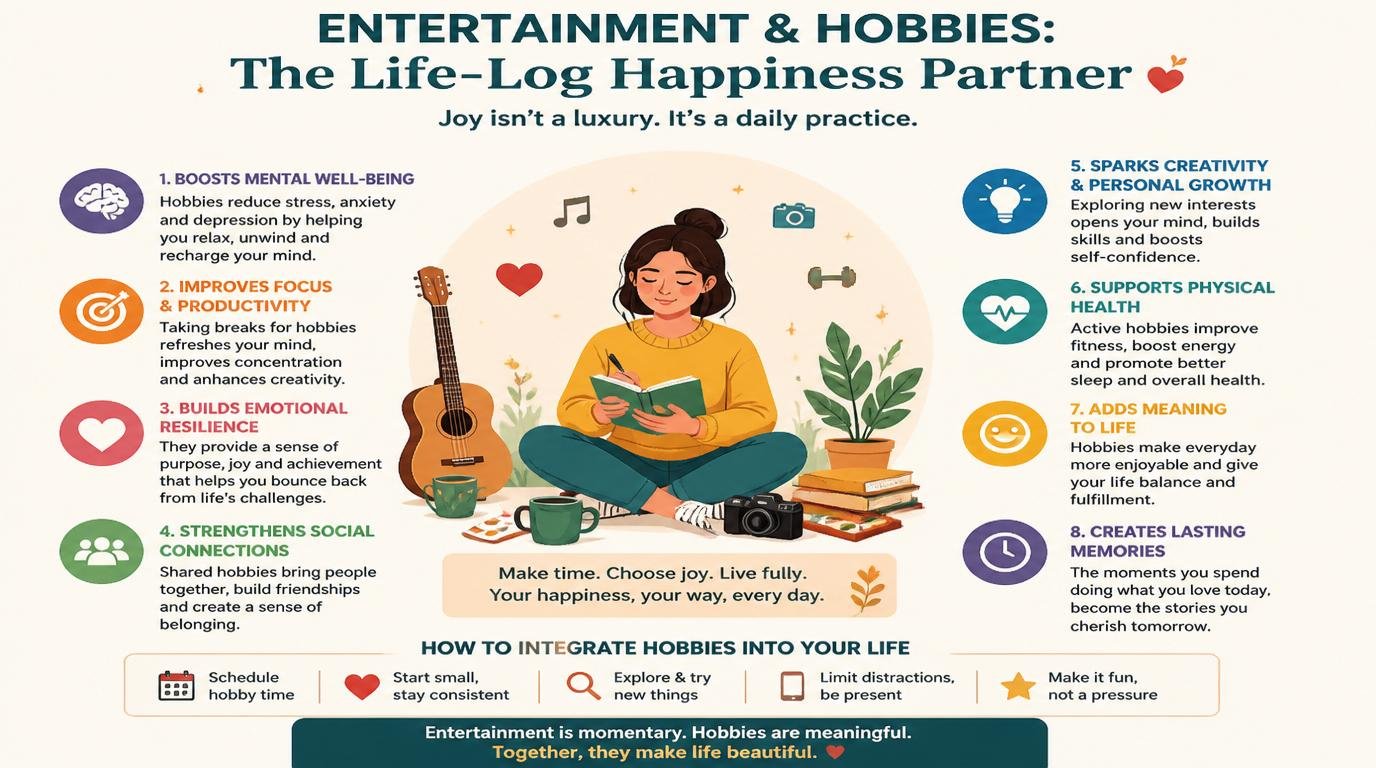
Entertainment and Hobbies: The Lifelong Happiness Partner
In today’s fast-moving world, people are constantly chasing success, money, and responsibilities. While these things are important, many individuals forget one essential ingredient of a meaningful life — happiness. True happiness does not come only from achievements or material possessions; it also comes from the joy we experience in our free time. This is where entertainment and hobbies become powerful lifelong companions.
Entertainment and hobbies are not just activities to “pass time.” They are essential for mental peace, emotional balance, creativity, personal growth, and social connection. They help people stay refreshed, motivated, and emotionally healthy throughout life. Whether it is reading books, listening to music, gardening, painting, traveling, gaming, cooking, dancing, photography, sports, or watching movies, every hobby adds color and meaning to life.
This blog explores why entertainment and hobbies are extremely important, how they improve our overall well-being, and why every person should integrate them into daily life.
Understanding Entertainment and Hobbies
Before discussing their importance, it is necessary to understand the difference between entertainment and hobbies.
What is Entertainment?
Entertainment refers to activities that provide enjoyment, relaxation, and amusement. It helps people escape stress and refresh their minds. Examples include:
- Watching movies or TV shows
- Listening to music
- Playing video games
- Attending concerts or events
- Traveling
- Watching sports
Entertainment is usually consumed for relaxation and emotional satisfaction.
What are Hobbies?
Hobbies are activities people actively engage in during their free time because they enjoy them. Hobbies often involve creativity, learning, or skill development. Examples include:
- Painting
- Writing
- Gardening
- Photography
- Cooking
- Playing musical instruments
- Crafting
- Sports and fitness
Unlike passive entertainment, hobbies are often productive and personally fulfilling.
Why Entertainment and Hobbies Are Important in Life
1. They Reduce Stress and Mental Pressure
Modern life is full of pressure. People deal with work stress, academic pressure, financial responsibilities, social expectations, and personal challenges every day. Continuous stress can damage mental and physical health.
Entertainment and hobbies act as natural stress relievers. When people engage in enjoyable activities, their minds relax and shift away from worries. Activities such as music, painting, or gardening calm the brain and reduce anxiety.
For example:
- Listening to soothing music lowers stress hormones.
- Playing sports releases endorphins, also known as “happy hormones.”
- Reading books helps the mind escape daily tension.
- Traveling refreshes emotional energy.
A person who regularly spends time on hobbies often feels more peaceful, balanced, and emotionally strong.
2. They Improve Mental Health
Mental health is just as important as physical health. Unfortunately, many people ignore emotional well-being until problems become serious.
Hobbies and entertainment improve mental health in several ways:
- They reduce loneliness and depression.
- They increase self-confidence.
- They provide emotional comfort.
- They create a sense of purpose.
Creative hobbies like writing, music, or art help people express emotions they may not be able to express through words. This emotional release is extremely healthy for the mind.
Research also shows that people with hobbies are less likely to experience chronic stress, burnout, and emotional exhaustion.
3. They Bring Joy and Happiness
Life becomes dull and exhausting when it revolves only around responsibilities. Entertainment and hobbies introduce excitement, fun, and joy into everyday life.
Imagine a life with no music, no movies, no sports, no art, and no personal interests. Such a life would feel emotionally empty.
Hobbies create moments of happiness because:
- They give us something to look forward to.
- They help us enjoy the present moment.
- They make life more colorful and meaningful.
Even simple hobbies like cooking, cycling, or collecting books can create deep personal satisfaction.
Happiness is not always found in big achievements; sometimes it exists in small joyful activities we love.
4. They Enhance Creativity and Imagination
Creative hobbies stimulate the brain and improve imagination. Activities such as painting, photography, storytelling, music, and crafting encourage innovative thinking.
Creativity is not useful only for artists. It also improves problem-solving skills in daily life and professional careers.
For example:
- A person who enjoys photography learns observation and perspective.
- Someone who writes regularly develops communication skills.
- Playing strategy games improves decision-making abilities.
Creative activities keep the brain active and flexible, which is beneficial at every age.
5. They Help Build Personal Identity
Hobbies often become part of a person’s identity. People are remembered not only for their jobs but also for their passions and interests.
Someone may be:
- A teacher who loves painting
- An engineer passionate about music
- A doctor interested in photography
- A student who enjoys sports
Hobbies make people unique and give them individuality beyond professional labels.
They also help people discover hidden talents and passions they never knew they had.
6. They Improve Physical Health
Many hobbies involve physical activity, which directly benefits the body.
Examples include:
- Dancing
- Swimming
- Cycling
- Hiking
- Yoga
- Sports
These activities:
- Improve fitness
- Increase stamina
- Strengthen muscles
- Improve heart health
- Boost energy levels
Even hobbies like gardening or walking help maintain an active lifestyle.
People who enjoy active hobbies are more likely to stay physically healthy because they exercise willingly rather than treating fitness as a burden.
7. They Strengthen Social Connections
Entertainment and hobbies often bring people together. Shared interests help individuals connect, communicate, and build friendships.
For example:
- Sports create teamwork and bonding.
- Music communities unite people emotionally.
- Book clubs encourage intellectual discussions.
- Gaming communities create friendships worldwide.
Strong social relationships are important for emotional well-being and happiness.
People with hobbies often find it easier to socialize because hobbies provide common topics and shared experiences.
8. They Increase Productivity and Motivation
Many people believe hobbies waste time, but the opposite is often true.
Taking breaks for enjoyable activities refreshes the mind and increases productivity. Continuous work without relaxation leads to burnout and reduced efficiency.
Entertainment and hobbies:
- Recharge mental energy
- Improve focus
- Increase motivation
- Enhance work performance
A relaxed mind works more effectively than an exhausted one.
This is why successful people often maintain hobbies alongside their professional lives.
9. They Encourage Lifelong Learning
Hobbies keep people curious and mentally active throughout life.
For example:
- Learning an instrument develops discipline.
- Cooking teaches creativity and patience.
- Photography improves technical skills.
- Reading expands knowledge.
Hobbies encourage continuous growth and learning, regardless of age.
Even elderly people who engage in hobbies often maintain sharper memory and better emotional health.
10. They Help Create Work-Life Balance
One of the biggest challenges today is maintaining a healthy balance between work and personal life.
Without entertainment or hobbies, life becomes centered only around responsibilities. This imbalance causes stress, frustration, and emotional fatigue.
Hobbies provide:
- Personal space
- Relaxation
- Emotional recovery
- A break from routine
They remind people that life is not only about surviving but also about enjoying the journey.
The Role of Entertainment and Hobbies in Different Age Groups
Children
For children, hobbies:
- Improve creativity
- Build confidence
- Develop social skills
- Reduce screen addiction
Activities like drawing, sports, music, and storytelling support healthy development.
Teenagers
Teenagers face academic pressure and emotional changes. Hobbies help them:
- Reduce stress
- Discover talents
- Stay away from negative influences
- Build self-esteem
Adults
Adults often become trapped in routines and responsibilities. Hobbies help them:
- Relax mentally
- Maintain emotional health
- Improve work-life balance
- Stay socially connected
Elderly People
For older adults, hobbies:
- Prevent loneliness
- Keep the mind active
- Provide emotional fulfillment
- Improve quality of life
Activities like gardening, reading, walking, and music are especially beneficial.
The Dangers of Ignoring Hobbies and Entertainment
A life without enjoyable activities can become emotionally exhausting.
People who ignore hobbies may experience:
- Stress and burnout
- Emotional emptiness
- Lack of motivation
- Social isolation
- Reduced creativity
Constant work without relaxation negatively affects both mental and physical health.
This is why entertainment and hobbies should not be considered luxuries — they are necessities.
How to Integrate Hobbies and Entertainment into Daily Life
Many people say they are “too busy” for hobbies. However, even small efforts can make a huge difference.
Here are practical ways to integrate hobbies into life:
1. Schedule Time for Yourself
Dedicate at least 30–60 minutes regularly for activities you enjoy.
2. Reduce Excessive Screen Time
Instead of endless scrolling on social media, invest time in meaningful hobbies.
3. Explore New Interests
Try different activities until you discover something you genuinely enjoy.
4. Join Communities or Clubs
Being part of groups increases motivation and consistency.
5. Prioritize Happiness
Understand that personal joy is important for overall well-being.
Conclusion
Entertainment and hobbies are not distractions from life — they are essential parts of a happy and healthy life. They reduce stress, improve mental health, encourage creativity, strengthen relationships, and bring emotional satisfaction.
In a world where people are constantly busy, hobbies remind us to slow down, breathe, and enjoy life. They help transform ordinary routines into meaningful experiences and give people a sense of purpose beyond responsibilities.
No matter your age, profession, or lifestyle, integrating entertainment and hobbies into daily life can dramatically improve your overall happiness and well-being.
Life is not meant to be lived only through work and responsibilities. It is also meant to be enjoyed, explored, and celebrated. And entertainment and hobbies are truly the lifelong partners that make this journey beautiful.