Refrigerators: Complete Guide to Technology, Types, and Smart Buying Tips
A refrigerator is one of the most important appliances in every modern home. From preserving vegetables and dairy products to keeping beverages chilled and preventing food spoilage, refrigerators have become an essential part of daily life. With rapid advancements in cooling technology, today’s refrigerators are smarter, more energy-efficient, and loaded with features that improve convenience and food freshness.
In this complete guide, you will learn how refrigerators work, the technologies used in modern refrigerators, different types available in the market, and the most important factors to consider before buying one.
What Is a Refrigerator?
A refrigerator is a household appliance designed to keep food and beverages cold by removing heat from its internal compartment. Low temperatures slow down bacterial growth, helping food stay fresh for longer periods.
Modern refrigerators typically include:
- Fresh food compartment
- Freezer section
- Temperature control system
- Cooling mechanism
- Shelves and storage drawers
- Energy-saving technology
How Does a Refrigerator Work?
A refrigerator works using the principle of heat transfer. It removes heat from inside the appliance and releases it outside through a refrigeration cycle.
Main Components of a Refrigerator
1. Compressor
The compressor is the heart of the refrigerator. It compresses refrigerant gas and circulates it through the cooling system.
2. Condenser Coils
These coils release heat collected from inside the refrigerator to the surrounding environment.
3. Expansion Valve
This valve reduces the pressure of the refrigerant, cooling it rapidly.
4. Evaporator Coils
These coils absorb heat from inside the refrigerator, making the interior cold.
5. Refrigerant
A special cooling fluid that continuously changes between liquid and gas states to transfer heat.
Refrigeration Cycle Explained
The cooling process follows these steps:
- The compressor compresses refrigerant gas.
- The gas becomes hot and moves to condenser coils.
- Heat is released outside the refrigerator.
- Refrigerant turns into liquid form.
- The expansion valve lowers its pressure.
- Refrigerant becomes extremely cold.
- Evaporator coils absorb heat from inside the refrigerator.
- Cold air circulates throughout the compartments.
This cycle repeats continuously to maintain cooling.
Modern Refrigerator Technologies
Today’s refrigerators use advanced technologies for better cooling performance and energy efficiency.
Inverter Compressor Technology
Inverter compressors adjust cooling speed according to usage and temperature conditions.
Benefits:
- Lower electricity consumption
- Reduced noise
- Longer compressor life
- Better temperature stability
Many premium refrigerators now come with digital inverter technology.
Frost-Free Technology
Frost-free refrigerators prevent ice buildup automatically.
Advantages:
- No manual defrosting
- Uniform cooling
- Better food preservation
- More convenience
Multi-Air Flow Cooling
Multiple air vents distribute cool air evenly throughout the refrigerator.
Benefits:
- Uniform temperature
- Faster cooling
- Improved freshness
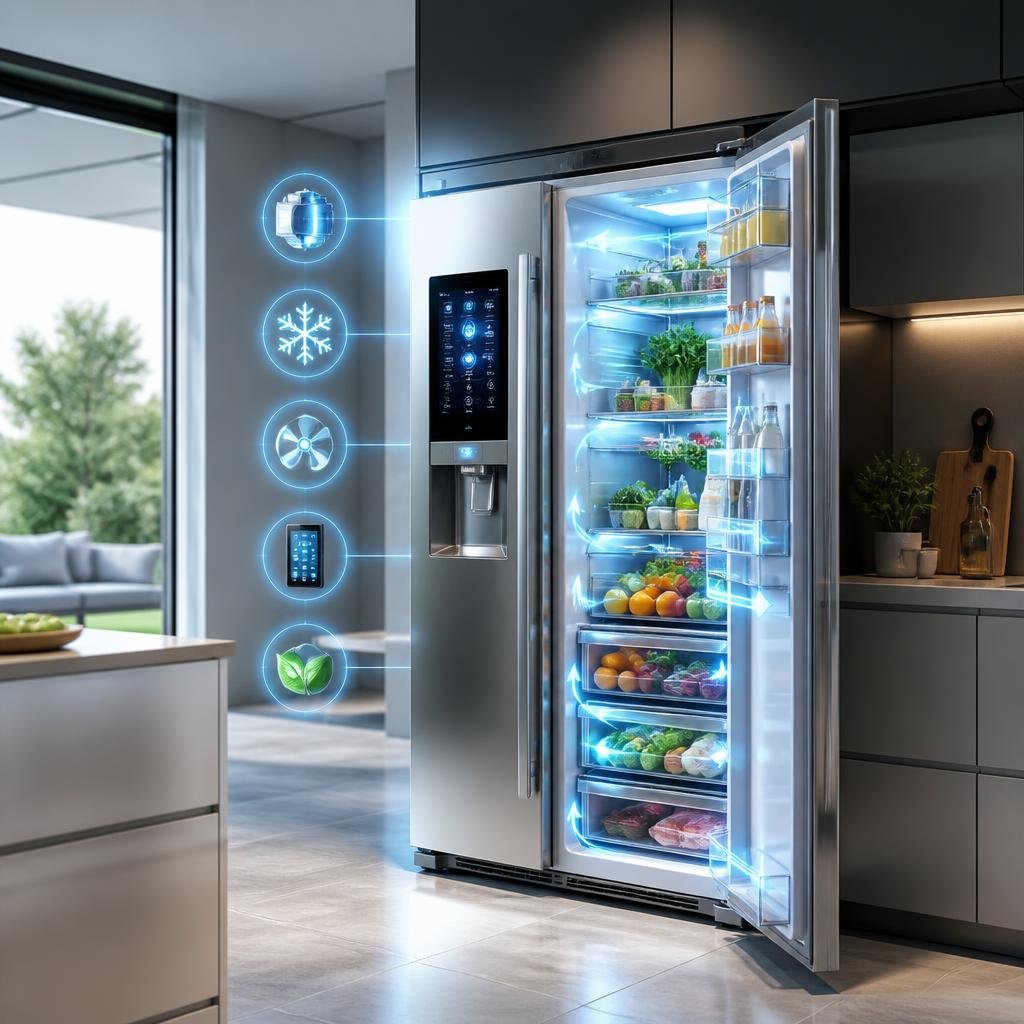
Smart Refrigerators
Smart refrigerators include internet connectivity and intelligent features.
Features:
- Touchscreen display
- Wi-Fi connectivity
- Temperature monitoring apps
- Voice assistant support
- Internal cameras
Convertible Refrigerators
These models allow users to convert freezer space into additional fridge storage.
Useful For:
- Large families
- Seasonal storage needs
- Festival food storage
Types of Refrigerators
Single Door Refrigerator
Best For:
- Small families
- Students
- Couples
Advantages:
- Affordable
- Compact size
- Lower electricity usage
Disadvantages:
- Limited storage
- Manual defrost in many models
Double Door Refrigerator
Best For:
- Medium-sized families
Advantages:
- Separate freezer
- Frost-free operation
- Larger capacity
Disadvantages:
- Higher power consumption than single-door models
Side-by-Side Refrigerator
Best For:
- Large families
- Premium kitchens
Advantages:
- Massive storage space
- Advanced features
- Stylish design
Disadvantages:
- Expensive
- Requires more space
French Door Refrigerator
Features:
- Double-door refrigerator section
- Bottom freezer drawer
- Premium aesthetics
Refrigerator Buying Guide
Before purchasing a refrigerator, consider the following important factors.
1. Capacity
Choose refrigerator size based on family size.
| Family Size | Recommended Capacity |
|---|---|
| 1–2 Members | 180–250 Liters |
| 3–4 Members | 250–400 Liters |
| 5+ Members | 400+ Liters |
2. Energy Efficiency
Always check the energy rating.
Higher star ratings mean:
- Lower electricity bills
- Better efficiency
- Environment-friendly performance
Look for inverter technology combined with high energy ratings.
3. Cooling Technology
Choose according to your needs.
| Technology | Best For |
|---|---|
| Direct Cool | Budget users |
| Frost-Free | Convenience |
| Inverter Cooling | Energy saving |
| Multi-Air Flow | Uniform cooling |
4. Space and Dimensions
Measure kitchen space before buying.
Check:
- Width
- Height
- Door opening clearance
- Ventilation space
5. Build Quality
Look for:
- Toughened glass shelves
- Anti-rust body
- Durable door seals
- High-quality compressor
6. Noise Level
Modern inverter refrigerators operate quietly. If noise matters, choose low-noise compressor models.
7. Smart Features
Premium refrigerators may include:
- Wi-Fi control
- Touch panel
- Ice maker
- Water dispenser
- Temperature sensors
8. Brand Reputation and Warranty
Always compare:
- Compressor warranty
- Customer service
- Spare parts availability
- Service network
Refrigerator Maintenance Tips
Proper maintenance improves performance and lifespan.
Cleaning Tips
- Clean shelves regularly
- Remove expired food
- Wipe door seals
- Keep condenser coils dust-free
Temperature Settings
Recommended settings:
- Refrigerator: 3°C to 5°C
- Freezer: -18°C
Avoid Overloading
Overfilling blocks airflow and reduces cooling efficiency.
Keep Proper Ventilation
Maintain space behind the refrigerator for heat dissipation.
Common Refrigerator Problems
| Problem | Possible Cause |
|---|---|
| Not cooling properly | Dirty coils or low refrigerant |
| Excessive ice buildup | Faulty defrost system |
| Water leakage | Blocked drain pipe |
| Loud noise | Compressor or fan issue |
| Bad smell | Spoiled food or poor cleaning |
Advantages of Modern Refrigerators
- Better food preservation
- Energy savings
- Smart storage solutions
- Faster cooling
- Reduced food waste
- Advanced hygiene systems
Future of Refrigerator Technology
The refrigerator industry is rapidly evolving with AI and IoT integration.
Future innovations may include:
- AI-based cooling optimization
- Automatic grocery tracking
- Energy usage analytics
- Solar-powered refrigerators
- Eco-friendly refrigerants
Final Thoughts
A refrigerator is a long-term investment that directly affects your daily comfort, food quality, and electricity consumption. Understanding cooling technology, storage needs, energy efficiency, and modern features can help you choose the perfect refrigerator for your home.
Whether you need a compact single-door refrigerator for a small apartment or a smart side-by-side model for a large family, selecting the right appliance based on your lifestyle and budget ensures long-lasting value and convenience.
Invest wisely, compare features carefully, and prioritize energy efficiency for the best refrigerator buying experience.