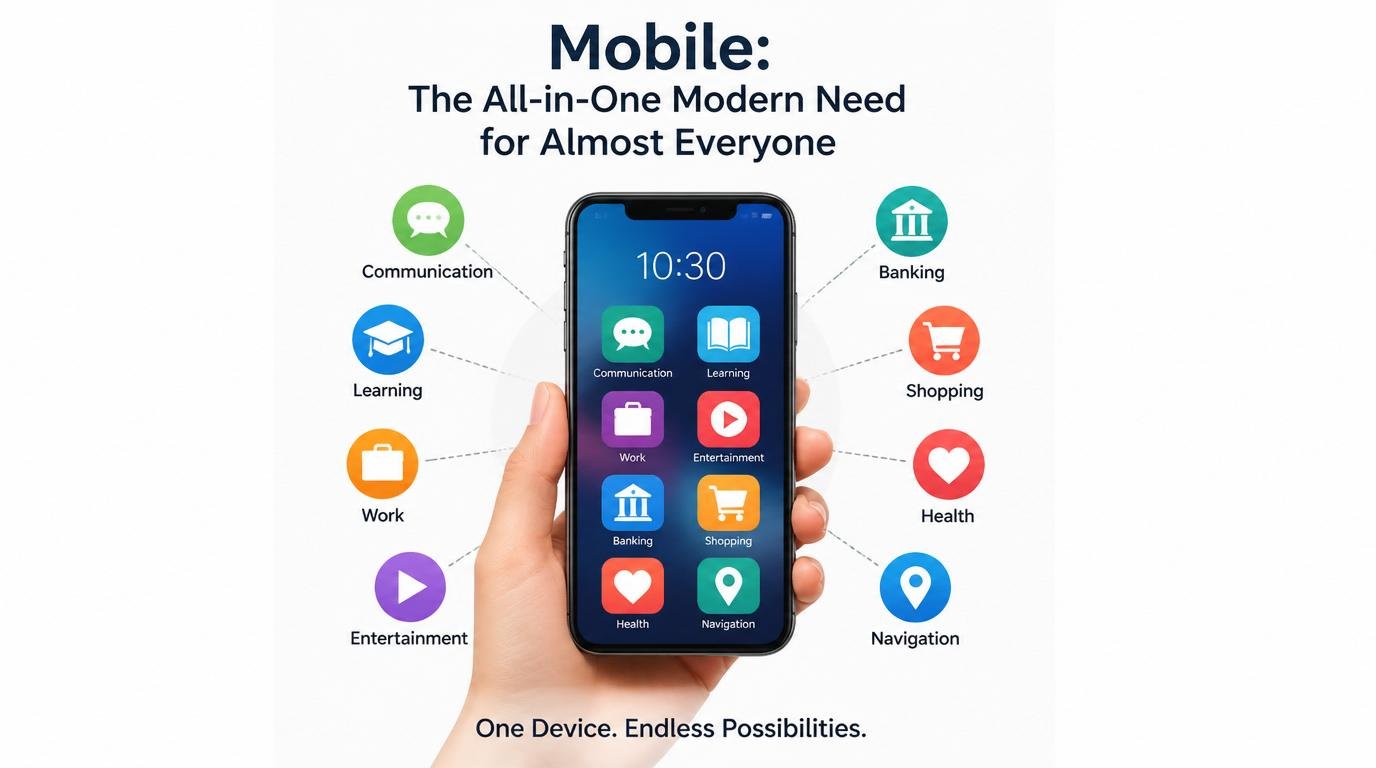
Mobile: The All-in-One Modern Need for Almost Everyone
In today’s fast-moving digital world, mobile phones have become one of the most essential parts of human life. From communication and education to entertainment, business, healthcare, and online opportunities, mobile devices are now deeply connected with almost every daily activity. What was once a simple communication device has evolved into a powerful smart tool that fits inside a pocket and helps people perform countless tasks with ease.
A mobile phone is no longer just a luxury item. For students, professionals, business owners, content creators, travelers, and even elderly people, it has become a necessity. Smartphones especially have transformed the way people live, learn, work, and connect with the world.
What Is a Mobile Phone?
A mobile phone is a portable electronic communication device that allows users to make calls, send messages, access the internet, use applications, and perform many digital activities from almost anywhere.
Modern smartphones are essentially small computers with advanced features such as:
- Internet access
- High-quality cameras
- GPS navigation
- Mobile banking
- Video conferencing
- Online learning
- Gaming
- Artificial Intelligence tools
- Cloud storage
- Social media access
Because of these features, mobile phones have become an all-in-one digital companion.
Evolution of Mobile Phones
The journey of mobile phones has been remarkable.
1. Basic Mobile Phones
Early mobile phones were mainly designed for:
- Calling
- Sending SMS messages
- Storing contacts
These phones had:
- Small screens
- Physical keypads
- Limited battery-consuming features
Examples included keypad phones and feature phones.
2. Feature Phones
Feature phones introduced:
- Basic internet
- Music players
- Cameras
- FM radio
- Games
They acted as a bridge between basic phones and smartphones.
3. Smartphones
Smartphones completely changed the technology industry. They introduced:
- Touchscreens
- App stores
- Advanced operating systems
- High-speed internet
- Multi-tasking features
- Artificial Intelligence integration
Today, smartphones are capable of handling professional-level tasks that once required computers.
Types of Mobile Phones
There are several types of mobile phones available today.
1. Basic Phones
These are simple phones mainly used for:
- Calling
- Text messaging
- Long battery life
Advantages
- Affordable
- Easy to use
- Durable
- Less distracting
Best For
- Elderly users
- Rural areas
- Backup communication
2. Feature Phones
Feature phones provide limited smart features such as:
- Internet browsing
- Cameras
- Music
- Apps
Advantages
- Better battery backup
- Affordable price
- Simple functionality
Best For
- Budget users
- First-time mobile users
3. Smartphones
Smartphones are advanced mobile devices with:
- Internet connectivity
- Application support
- Powerful processors
- HD cameras
- Gaming support
- AI-based tools
Major Smartphone Operating Systems
Android
- Open-source platform
- Highly customizable
- Used by many brands
iOS
- Developed by Apple
- Premium experience
- Strong security features
Advantages
- Multi-functional
- High performance
- Supports education and business
- Excellent connectivity
Categories of Smartphones
Smartphones can also be categorized according to their usage and price range.
1. Budget Smartphones
Affordable devices with basic smart features.
Suitable For
- Students
- Casual users
- Everyday communication
2. Mid-Range Smartphones
Balanced devices offering:
- Good performance
- Better cameras
- Gaming capability
Suitable For
- Professionals
- Content consumers
- Moderate gamers
3. Flagship Smartphones
Premium smartphones with:
- Top-level processors
- Advanced cameras
- AI features
- Professional performance
Suitable For
- Business professionals
- Content creators
- Heavy users
4. Gaming Smartphones
Specially designed for gaming enthusiasts.
Features
- High refresh-rate displays
- Powerful cooling systems
- Advanced graphics performance
5. Camera-Centric Smartphones
Focused on photography and videography.
Features
- High-resolution sensors
- Night photography
- AI image processing
- 4K and 8K video recording
Important Elements of a Mobile Phone
Modern mobile phones consist of many important components.
1. Processor (CPU)
The processor is the brain of the mobile phone.
Functions
- Runs applications
- Handles multitasking
- Controls overall performance
2. RAM
RAM helps the device run multiple applications smoothly.
More RAM Means
- Better multitasking
- Faster performance
- Improved gaming experience
3. Storage
Storage is used for:
- Photos
- Videos
- Apps
- Documents
Types
- Internal storage
- Expandable storage (memory card)
4. Battery
Battery capacity determines how long the phone lasts.
Important Features
- Fast charging
- Wireless charging
- Battery optimization
5. Display
Displays come in different technologies:
- LCD
- OLED
- AMOLED
Display Quality Affects
- Video watching
- Gaming
- User experience
6. Camera System
Modern mobile cameras are highly advanced.
Features
- Portrait mode
- AI enhancement
- Optical zoom
- Video stabilization
7. Operating System
The operating system controls all software functions.
Popular Systems
- Android
- iOS
8. Connectivity Features
These include:
- Wi-Fi
- Bluetooth
- GPS
- 4G and 5G networks
- NFC
Uses of Mobile Phones in Daily Life
Mobile phones are useful in countless ways.
1. Communication
The primary purpose of mobile phones remains communication.
Communication Methods
- Voice calls
- Video calls
- Messaging apps
- Emails
- Social media
People can instantly connect with family, friends, clients, and coworkers worldwide.
2. Education
Mobile phones have revolutionized education.
Educational Uses
- Online classes
- Digital books
- Educational apps
- Video lectures
- Research
- Skill development
Students from remote areas can now access quality education through smartphones.
Benefits
- Flexible learning
- Affordable education
- Global knowledge access
Mobile learning became especially important during global emergencies and lockdowns.
3. Online Opportunities
Mobile phones have created countless online earning opportunities.
Popular Online Opportunities
Freelancing
People can work online using:
- Writing
- Graphic design
- Programming
- Video editing
- Digital marketing
Content Creation
Users can create:
- YouTube videos
- Social media content
- Blogs
- Podcasts
Online Business
Mobile phones support:
- E-commerce
- Online stores
- Product marketing
- Customer communication
Stock Market and Trading
People can:
- Invest online
- Monitor stocks
- Trade digitally
Remote Work
Professionals can work from home using mobile applications.
Mobile Phones and Social Empowerment
Mobile phones are empowering people in many ways.
1. Empowering Students
Students can:
- Learn new skills
- Attend online courses
- Prepare for competitive exams
- Access global information
2. Empowering Women
Women can:
- Start online businesses
- Learn professional skills
- Work remotely
- Access financial services
Mobile technology has increased independence and opportunities for women worldwide.
3. Empowering Rural Communities
Mobile phones help rural communities by providing:
- Online banking
- Agricultural information
- Weather updates
- Government services
- Telemedicine
Farmers can now access market prices and modern farming techniques instantly.
4. Helping Small Businesses
Small businesses use mobile phones for:
- Marketing
- Customer support
- Online payments
- Product promotion
Social media and messaging platforms have made business growth easier than ever.
Mobile Phones in Healthcare
Healthcare has improved greatly because of smartphones.
Medical Uses
- Online doctor consultations
- Health monitoring apps
- Emergency communication
- Medicine reminders
- Fitness tracking
Wearable technology and health applications help users monitor their physical condition regularly.
Entertainment Through Mobile Phones
Entertainment is one of the biggest uses of smartphones.
Entertainment Features
- Video streaming
- Music listening
- Gaming
- Photography
- Social media
- E-books
People can enjoy entertainment anytime and anywhere.
Mobile Phones in Banking and Finance
Digital banking has become very popular because of mobile devices.
Financial Uses
- Online banking
- Mobile payments
- UPI transactions
- Bill payments
- Money transfers
- Digital wallets
This has made financial services faster and more accessible.
Advantages of Mobile Phones
Mobile phones provide many benefits.
Major Advantages
- Instant communication
- Easy access to information
- Online education
- Remote work opportunities
- Digital payments
- Entertainment
- Emergency assistance
- Business growth
- Global connectivity
They save time, improve productivity, and simplify daily tasks.
Disadvantages of Excessive Mobile Usage
Despite their benefits, excessive mobile phone use can create problems.
Common Issues
- Addiction
- Reduced physical activity
- Eye strain
- Sleep problems
- Social isolation
- Privacy risks
- Cybersecurity threats
Balanced usage is important for maintaining a healthy lifestyle.
Future of Mobile Technology
The future of mobile technology looks highly advanced.
Upcoming Innovations
- Artificial Intelligence integration
- Foldable smartphones
- Advanced virtual reality
- Faster 5G and 6G networks
- Smart ecosystems
- Improved battery technology
Mobile phones may become even more intelligent and deeply connected with daily life.
Conclusion
Mobile phones have become one of the greatest technological inventions of the modern era. They are no longer limited to communication alone. Today, they support education, business, healthcare, entertainment, banking, social interaction, and global opportunities. Smartphones empower people by providing access to information, skills, jobs, and digital services from anywhere in the world.
For students, professionals, entrepreneurs, and families, mobile phones have become an all-in-one modern necessity. While excessive use should be controlled, responsible usage of mobile technology can greatly improve productivity, learning, communication, and overall quality of life.
In the modern digital age, mobile phones are not just devices — they are powerful tools that connect people to knowledge, opportunities, and the future.