Smart India: The Most Useful Government Apps for Indian Citizens
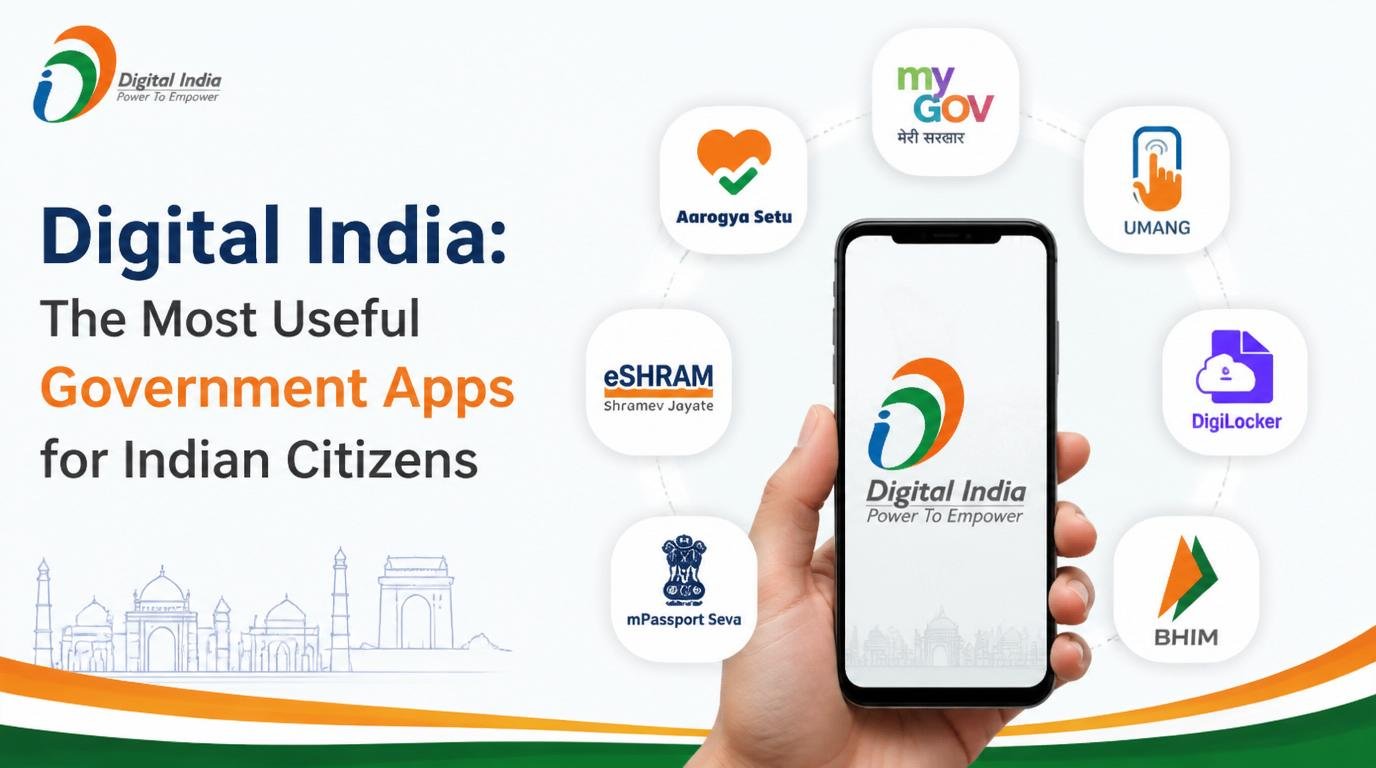
India’s digital revolution has transformed the way citizens interact with government services. From carrying Aadhaar digitally to paying taxes, booking vaccines, checking land records, storing certificates, paying utility bills, and accessing farmer benefits — government apps now act as a 24-hour digital assistant for millions of Indians.
The Government of India has launched dozens of official apps under initiatives like Digital India, making governance faster, paperless, transparent, and accessible from smartphones.
Why Government Apps Matter
Government apps are no longer optional utilities. They are becoming the backbone of India’s digital governance ecosystem.
Major Benefits
- 24/7 access to government services
- Reduced paperwork
- Faster approvals and verification
- Digital identity integration
- Secure cloud storage
- Real-time notifications
- Easy subsidy and scheme tracking
- Cashless digital transactions
- Online document verification
- Reduced corruption and middlemen
India’s Digital India mission accelerated these services by integrating Aadhaar, mobile numbers, cloud systems, AI-based verification, APIs, QR authentication, and UPI-based payment systems.
1. UMANG
What is UMANG?
UMANG stands for Unified Mobile Application for New-age Governance. It is one of the biggest government service platforms in India.
Developed by the Ministry of Electronics and Information Technology (MeitY), UMANG combines hundreds of central and state government services into a single app.
Key Features
- EPFO services
- PAN services
- Gas booking
- Passport services
- Pension services
- DigiLocker integration
- Aadhaar services
- Bill payments
- Scholarship tracking
- Crop insurance services
- Healthcare access
Technology Used
- Cloud computing
- Aadhaar authentication
- API integration
- Multi-language support
- AI-based service routing
- OTP verification
Why UMANG is Important
Instead of installing separate government apps, citizens can access multiple departments from one platform.
Best Uses
- PF balance check
- Pension status
- Gas subsidy tracking
- Income tax services
- Student services
2. DigiLocker
What is DigiLocker?
DigiLocker is India’s official digital document storage platform launched under Digital India.
It allows citizens to store verified government documents digitally.
Key Features
- Store Aadhaar digitally
- Store PAN card
- Store driving license
- Educational certificates
- Vehicle RC
- Insurance documents
- PDF sharing
- QR verification
Technology Used
- Secure cloud infrastructure
- Encryption
- QR authentication
- Digital signatures
- API-based document fetching
Major Advantages
- No need to carry physical documents
- Legally accepted documents
- Easy online verification
- Instant document sharing
Security Features
- Aadhaar-linked login
- Mobile OTP
- Encrypted storage
- Government-grade cloud systems
3. mAadhaar
What is mAadhaar?
mAadhaar is the official Aadhaar app developed by UIDAI.
It allows users to manage Aadhaar digitally from smartphones.
Main Features
- Digital Aadhaar card
- QR code verification
- Biometric locking
- Aadhaar update tracking
- Offline eKYC
- Family Aadhaar management
Why It’s Useful
- Instant Aadhaar access
- Easy identity verification
- Enhanced biometric security
Technology Used
- UIDAI secure servers
- Encryption
- Biometric authentication
- QR verification
4. BHIM
What is BHIM?
BHIM stands for Bharat Interface for Money.
It is India’s official UPI payment app launched by NPCI.
Features
- UPI money transfer
- QR payments
- Bill payments
- Bank account linking
- Merchant payments
- Multi-language support
Technology Behind BHIM
- UPI infrastructure
- Real-time banking APIs
- Encryption systems
- NPCI transaction routing
Benefits
- Fast transactions
- Cashless economy support
- Simple interface
- Works 24/7
Best For
- Everyday payments
- Merchant transactions
- Utility bills
- Bank transfers
5. Aarogya Setu
What is Aarogya Setu?
Initially launched during the COVID-19 pandemic, Aarogya Setu later evolved into a broader digital health platform integrated with ABDM services.
Features
- Health ID creation
- Vaccination certificates
- Health records
- Hospital discovery
- Self-assessment tools
- COVID alerts
Technology Used
- Bluetooth tracing
- GPS integration
- Cloud databases
- Health APIs
Privacy Debates
The app received both praise and criticism regarding privacy and transparency during the pandemic. Discussions around open-source access and data protection became major public topics.
Why It Matters
It introduced large-scale digital public health infrastructure in India.
6. mParivahan
What is mParivahan?
Official transport app by the Ministry of Road Transport and Highways.
Features
- Digital driving license
- Vehicle RC access
- Challan status
- Vehicle ownership details
- Insurance validity check
Benefits
- Avoid carrying physical DL and RC
- Easy vehicle verification
- Quick challan payments
Technology
- VAHAN database integration
- QR-based verification
- Cloud synchronization
7. CoWIN
What is CoWIN?
CoWIN became globally recognized during India’s vaccination campaign.
Features
- Vaccine booking
- Vaccination certificates
- Slot tracking
- Beneficiary management
Technology Used
- Cloud scaling
- QR verification
- Real-time slot systems
- API integrations
Global Impact
India’s CoWIN platform became one of the world’s largest vaccination management systems.
8. PM-KISAN
Features
- Farmer payment tracking
- Installment status
- Scheme information
- Aadhaar verification
Benefits
- Direct benefit transfer tracking
- Reduced middlemen
- Fast subsidy monitoring
9. eNAM
Purpose
Digital marketplace for farmers.
Features
- Crop trading
- Market price checking
- Online bidding
- Transparent agricultural sales
Importance
Helps farmers get better pricing and market access.
10. Jan Aushadhi Sugam
Features
- Generic medicine search
- Nearby Jan Aushadhi stores
- Medicine price comparison
Benefits
- Affordable healthcare
- Cost-saving medicine alternatives
11. DigiYatra
What is DigiYatra?
Facial-recognition-based airport travel platform in India.
Features
- Face-based airport entry
- Contactless boarding
- Faster security clearance
Technology Used
- AI facial recognition
- Biometric verification
- Airport integration systems
12. AIS App
Features
- Taxpayer information
- Income tracking
- TDS records
- Financial transaction monitoring
Why Important
Makes tax filing transparent and easier.
13. MyGov
Features
- Government polls
- Public participation
- Suggestions and feedback
- Policy engagement
Importance
Connects citizens directly with governance initiatives.
14. Bhashini
Features
- Real-time translation
- Voice translation
- Indian language AI support
Technology Used
- Artificial Intelligence
- Natural Language Processing
- Speech recognition
15. Indian Weather App
Features
- Weather forecasting
- Rain alerts
- Cyclone tracking
- Disaster warnings
Importance
Essential for farmers and disaster preparedness.
Technologies Powering Indian Government Apps
1. Cloud Computing
Government apps rely heavily on cloud infrastructure for scalability and 24-hour accessibility.
2. Aadhaar Authentication
Secure identity verification across services.
3. APIs
Apps communicate with different government databases in real time.
4. Artificial Intelligence
Used in:
- Language translation
- Facial recognition
- Smart routing
- Fraud detection
5. QR Verification
Used in:
- Vaccine certificates
- Aadhaar verification
- DigiLocker documents
6. UPI Infrastructure
Powering BHIM and digital payments.
Advantages of Government Apps
Convenience
Citizens can access services anytime.
Transparency
Reduced corruption and manual processing.
Faster Services
Applications and approvals become quicker.
Paperless Governance
Supports environmental sustainability.
Financial Inclusion
Brings banking and subsidies to rural citizens.
Challenges Faced by Government Apps
Privacy Concerns
Apps collecting location and personal data often face scrutiny.
Server Overload
Heavy traffic sometimes causes downtime.
Digital Literacy Issues
Rural and elderly users may face difficulties.
Language Barriers
Although improving, regional language support still needs expansion.
Cybersecurity Risks
Government platforms remain targets for cyberattacks.
Tips for Safely Using Government Apps
Download Only Official Apps
Always verify:
- Government developer name
- Official website
- Verified Play Store listing
Enable Device Security
- Fingerprint lock
- PIN protection
- Two-factor authentication
Avoid Sharing OTPs
Government officials never ask for OTPs.
Keep Apps Updated
Updates improve security and performance.
Best Government Apps Every Indian Should Install
| Category | Recommended App |
|---|---|
| All-in-one services | UMANG |
| Documents | DigiLocker |
| Aadhaar | mAadhaar |
| Payments | BHIM |
| Transport | mParivahan |
| Health | Aarogya Setu |
| Vaccination | CoWIN |
| Farmers | PM-KISAN |
| Medicines | Jan Aushadhi Sugam |
| Travel | DigiYatra |
Future of Indian Government Apps
India is moving toward an integrated digital governance ecosystem where one digital identity can connect citizens to healthcare, banking, education, transport, taxation, and welfare schemes.
Future developments may include:
- AI government assistants
- Voice-based governance
- Blockchain verification
- Unified citizen dashboards
- Smart city integration
- Digital rupee integration
India’s government apps are rapidly becoming a model for digital governance globally.
Final Thoughts
Indian government apps have transformed governance from paperwork-heavy systems into mobile-first digital services. Whether it is storing documents in DigiLocker, paying through BHIM, managing Aadhaar with mAadhaar, or accessing hundreds of services via UMANG, these apps now function as a 24-hour digital help guide for Indian citizens.
As India continues its Digital India journey, government apps will become even more intelligent, integrated, and citizen-friendly — making governance faster, safer, and more accessible for everyone.