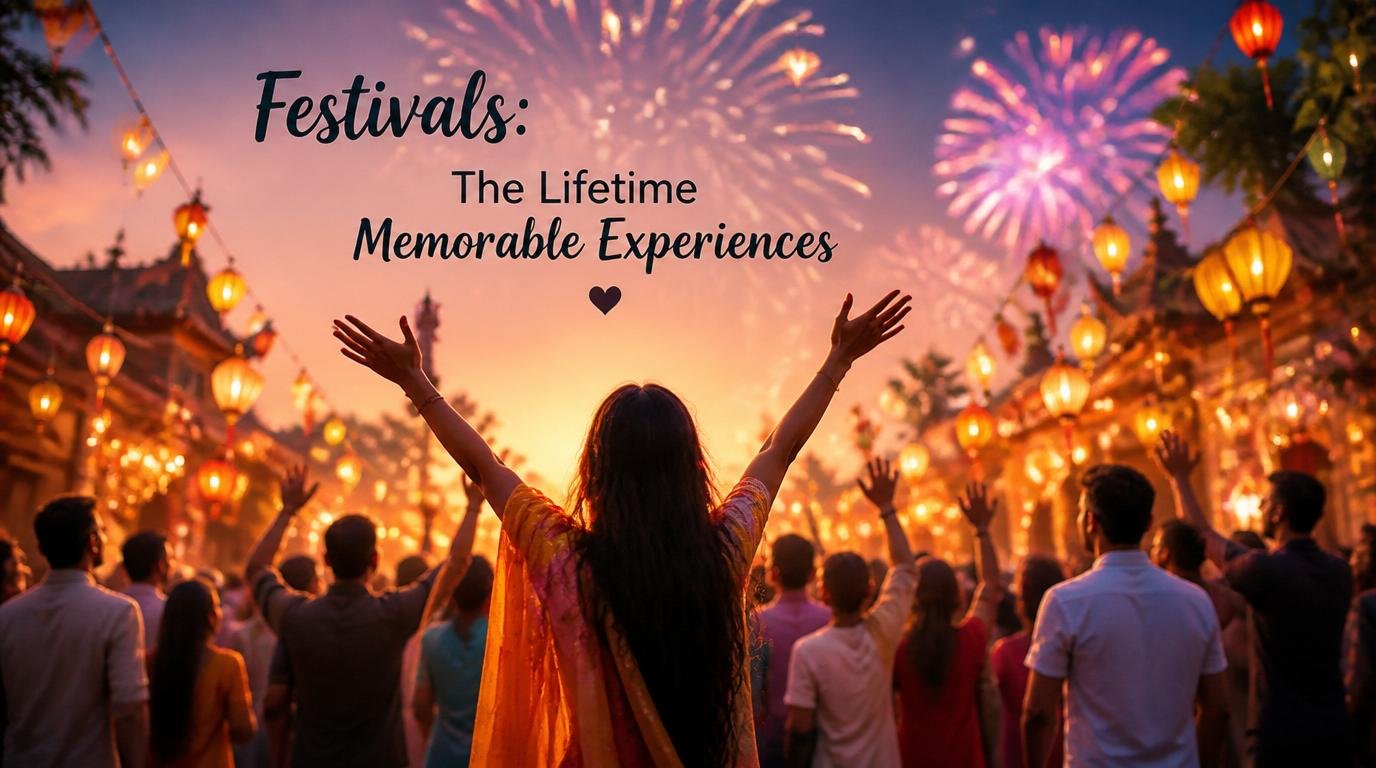
Festivals: Lifetime Memorable Experiences
Festivals are among the most beautiful expressions of human life. They bring people together, preserve traditions, strengthen relationships, and create unforgettable memories that stay with us forever. Across the world, every country, religion, and culture celebrates festivals in unique and colorful ways. Some festivals are spiritual, some historical, some seasonal, and others are simply joyful celebrations of life itself.
The corrected and more natural version of the topic is:
Festivals: Lifetime Memorable Experiences
Festivals are not merely holidays or occasions for entertainment. They are reflections of identity, culture, emotions, history, and human connection. In today’s fast-moving world, where people are often busy with work, technology, and personal struggles, festivals offer moments of happiness, togetherness, peace, and celebration.
This article explores the importance of festivals and cultural exposure in life, while also covering famous festivals from different countries, their celebration styles, traditions, and fascinating facts.
Why Festivals Are Important in Life
1. Festivals Bring People Together
One of the greatest purposes of festivals is unity. Festivals connect families, friends, neighbors, and communities. During celebrations, people forget differences of religion, language, caste, race, and nationality.
Whether it is a family dinner during Christmas, community prayers during Eid, or dancing together during Carnival, festivals strengthen human bonds.
Example:
- During Diwali in India, families reunite from different cities and countries.
- During Thanksgiving in the United States, millions travel to spend time with loved ones.
Festivals remind people that relationships are more valuable than material possessions.
2. Festivals Preserve Culture and Traditions
Every festival carries centuries of history and tradition. Without festivals, many cultural practices would disappear over time.
Traditional:
- clothing,
- music,
- dance,
- food,
- rituals,
- languages,
- storytelling,
- and art forms
are preserved through festivals.
Children learn about their heritage through celebrations passed down by elders.
Example:
- Japanese festivals preserve ancient Shinto traditions.
- Mexican festivals preserve indigenous Aztec and Mayan influences.
- African tribal festivals preserve traditional drumming and ceremonial dances.
Festivals are living museums of human civilization.
3. Festivals Provide Emotional Happiness
Modern life can be stressful and exhausting. Festivals offer emotional refreshment and joy.
People:
- decorate homes,
- wear new clothes,
- cook special meals,
- meet relatives,
- exchange gifts,
- dance,
- sing,
- and celebrate together.
These activities improve emotional well-being and reduce loneliness.
Festivals create:
- excitement,
- hope,
- positivity,
- gratitude,
- and emotional healing.
For many people, festival memories become the happiest moments of childhood and family life.
4. Festivals Teach Values and Morality
Many festivals are connected with moral lessons and spiritual teachings.
They teach:
- kindness,
- gratitude,
- sacrifice,
- forgiveness,
- compassion,
- charity,
- and faith.
Examples:
- Eid al-Fitr teaches generosity and charity.
- Christmas teaches love and giving.
- Diwali symbolizes the victory of good over evil.
- Hanukkah represents faith and perseverance.
- Vesak promotes peace and enlightenment.
Festivals help people reconnect with humanity and spirituality.
5. Festivals Boost Economies and Tourism
Festivals contribute significantly to global economies.
They create opportunities for:
- tourism,
- local businesses,
- hotels,
- restaurants,
- artists,
- craftsmen,
- transport industries,
- and event organizers.
Many countries attract millions of tourists through famous festivals.
Example:
- Brazil’s Carnival generates massive tourism revenue.
- Germany’s Oktoberfest attracts visitors worldwide.
- China’s Lunar New Year creates one of the world’s largest shopping seasons.
Festivals support both culture and economic growth.
6. Cultural Exposure Makes People More Open-Minded
Experiencing festivals from different cultures broadens understanding and respect for diversity.
When people witness global traditions, they learn:
- tolerance,
- cultural appreciation,
- global awareness,
- and respect for different beliefs.
Cultural exposure helps reduce prejudice and encourages international friendship.
Travelers often remember foreign festivals more than tourist attractions because festivals reveal the true soul of a country.
Amazing Festivals Around the World
Festivals of India
India is known as the “Land of Festivals” because of its incredible cultural and religious diversity.
1. Diwali – Festival of Lights
Celebration Style:
- Homes decorated with lamps and candles
- Fireworks and sweets
- Family gatherings
- Worship of Goddess Lakshmi
Meaning:
Victory of light over darkness and good over evil.
Amazing Facts:
- Celebrated by millions worldwide
- One of the brightest festivals visible from space
- Different regions celebrate it differently
2. Holi – Festival of Colors
Celebration Style:
- Throwing colored powders and water
- Music and dancing
- Traditional sweets like gujiya
Meaning:
Celebrates love, spring, and the victory of good over evil.
Amazing Facts:
- Known worldwide as the “Festival of Colors”
- Celebrated with huge street parties
- Attracts many international tourists
3. Durga Puja
Celebration Style:
- Artistic idols of Goddess Durga
- Cultural performances
- Community feasts
Region:
Especially famous in West Bengal.
Amazing Facts:
- Massive artistic pandals are created yearly
- Celebrations continue for several days
4. Eid al-Fitr and Eid al-Adha
Celebration Style:
- Community prayers
- Charity and food sharing
- Family gatherings
Importance:
Promotes generosity, sacrifice, and unity.
5. Pongal
Region:
Tamil Nadu
Celebration Style:
- Harvest celebrations
- Traditional rice dishes
- Cattle worship
Meaning:
Expresses gratitude to nature and farmers.
6. Bihu
Region:
Assam
Celebration Style:
- Folk dances
- Music performances
- Traditional feasts
Meaning:
Celebrates the Assamese New Year and harvest season.
7. Onam
Region:
Kerala
Celebration Style:
- Floral decorations
- Boat races
- Grand feasts called “Onasadya”
Amazing Facts:
- Celebrates the legendary King Mahabali
- Famous for snake boat races
Festivals of China
1. Chinese New Year (Lunar New Year)
Celebration Style:
- Dragon dances
- Red lantern decorations
- Firecrackers
- Family reunions
Meaning:
Welcoming prosperity and luck.
Amazing Facts:
- Largest annual human migration occurs during this festival
- Celebrated across many Asian countries
2. Lantern Festival
Celebration Style:
- Lantern displays
- Traditional performances
- Solving lantern riddles
Symbolism:
Hope, unity, and happiness.
Festivals of Japan
1. Cherry Blossom Festival (Hanami)
Celebration Style:
- Picnics under cherry blossom trees
- Family and social gatherings
Meaning:
Represents the beauty and shortness of life.
Amazing Facts:
- Cherry blossom forecasts are followed nationally
- Tourism increases greatly during bloom season
2. Gion Matsuri
Region:
Kyoto
Celebration Style:
- Giant decorated floats
- Traditional Japanese clothing
- Cultural performances
History:
Over 1,000 years old.
Festivals of Thailand
Songkran Festival
Celebration Style:
- Massive water fights
- Street celebrations
- Temple visits
Meaning:
Thai New Year celebration and purification ritual.
Amazing Facts:
- Considered one of the world’s biggest water festivals
Festivals of South Korea
Chuseok
Celebration Style:
- Family reunions
- Ancestor worship
- Traditional foods
Meaning:
Harvest thanksgiving festival.
Festivals of Nepal
Tihar
Celebration Style:
- Oil lamps
- Decorations
- Worship of animals like dogs and cows
Amazing Facts:
- Dogs are honored with flower garlands
Festivals of Indonesia
Nyepi – Day of Silence
Celebration Style:
- Complete silence across Bali
- No travel, lights, or entertainment
Meaning:
Self-reflection and spiritual cleansing.
Amazing Facts:
- Airports in Bali temporarily close during Nyepi
Festivals of Brazil
Rio Carnival
Celebration Style:
- Samba dancing
- Giant parades
- Costumes and street parties
Amazing Facts:
- One of the world’s largest festivals
- Millions participate annually
Importance:
Represents freedom, joy, and artistic expression.
Festivals of Mexico
Día de los Muertos (Day of the Dead)
Celebration Style:
- Colorful skull decorations
- Altars for ancestors
- Music and food
Meaning:
Honoring deceased loved ones.
Amazing Facts:
- Combines indigenous and Spanish traditions
- Celebrated with joy rather than sadness
Festivals of Spain
La Tomatina
Celebration Style:
- Giant tomato fight
Amazing Facts:
- Thousands of people participate
- Tons of tomatoes are used
Running of the Bulls
Celebration Style:
- Participants run ahead of bulls through streets
Region:
Pamplona
Historical Significance:
Traditional event connected to ancient customs.
Festivals of Germany
Oktoberfest
Celebration Style:
- Traditional Bavarian clothing
- Music and food festivals
Amazing Facts:
- One of the world’s biggest beer festivals
- Attracts millions of tourists
Festivals of France
Cannes Film Festival
Celebration Style:
- International film premieres
- Celebrity gatherings
Importance:
One of the most prestigious cinema festivals worldwide.
Festivals of Italy
Venice Carnival
Celebration Style:
- Elegant masks
- Historical costumes
- Street performances
Amazing Facts:
- Dates back centuries
- Famous for mysterious mask traditions
Festivals of the United Kingdom
Notting Hill Carnival
Celebration Style:
- Caribbean music and dance
- Street food and colorful costumes
Importance:
Celebrates multicultural diversity.
Festivals of Ireland
St. Patrick’s Day
Celebration Style:
- Green-themed parades
- Irish music and dance
Meaning:
Honors Ireland’s patron saint.
Festivals of the United States
Thanksgiving
Celebration Style:
- Family dinners
- Turkey feasts
- Gratitude traditions
Importance:
Celebrates thankfulness and togetherness.
Halloween
Celebration Style:
- Costumes
- Trick-or-treating
- Haunted attractions
Amazing Facts:
- Originated from ancient Celtic traditions
Festivals of Canada
Winterlude
Celebration Style:
- Ice skating
- Snow sculptures
- Winter activities
Festivals of Australia
Sydney New Year’s Eve
Celebration Style:
- Massive fireworks at Sydney Harbour
Amazing Facts:
- One of the world’s first major New Year celebrations
Festivals of Africa
Africa has countless tribal, spiritual, and cultural festivals.
1. Gerewol Festival – Niger
Celebration Style:
- Traditional beauty contests
- Dance performances
Unique Fact:
Men compete to impress women through dance and appearance.
2. Timkat – Ethiopia
Celebration Style:
- Religious ceremonies
- Water blessings
Meaning:
Celebrates the baptism of Jesus Christ.
Festivals of the Middle East
Ramadan and Eid Celebrations
Celebration Style:
- Fasting
- Charity
- Community meals
- Night prayers
Importance:
Promotes self-discipline and compassion.
Festivals of Russia
Maslenitsa
Celebration Style:
- Pancake feasts
- Folk games
- Bonfires
Meaning:
Farewell to winter.
Festivals of Greece
Apokries Carnival
Celebration Style:
- Costumes
- Dancing
- Public celebrations
Meaning:
Celebrated before Lent.
Festivals of Peru
Inti Raymi
Celebration Style:
- Ancient Incan ceremonies
- Traditional costumes
Meaning:
Festival of the Sun God.
Festivals of Turkey
Whirling Dervishes Festival
Celebration Style:
- Spiritual dance ceremonies
Meaning:
Represents spiritual connection and meditation.
Regional Diversity in Festival Celebrations
Even within one country, festival styles differ greatly.
Example: India
- North India celebrates Diwali with grand fireworks.
- South India focuses more on spiritual rituals.
- West Bengal celebrates Durga Puja artistically.
- Kerala celebrates Onam with floral traditions.
Example: China
Different provinces have unique New Year foods, customs, and performances.
Example: Europe
Each region preserves local dances, costumes, and culinary traditions.
This diversity makes festivals even more fascinating.
How Festivals Create Lifetime Memories
People often remember:
- childhood festival excitement,
- family reunions,
- traditional foods,
- songs and dances,
- decorations,
- gifts,
- prayers,
- and emotional moments
for the rest of their lives.
Festivals become emotional landmarks in human memory.
A person may forget ordinary days, but they rarely forget:
- their first Diwali fireworks,
- first Christmas celebration,
- first Carnival dance,
- first Eid gathering,
- or first New Year countdown.
Festivals connect emotions with memories in powerful ways.
The Role of Festivals in Modern Society
In modern times, festivals are becoming even more important because they:
- reduce social isolation,
- encourage cultural understanding,
- support mental well-being,
- strengthen communities,
- and preserve disappearing traditions.
Even digital celebrations during difficult times have shown how deeply humans value festivals and togetherness.
Challenges Facing Festivals Today
Despite their importance, festivals face several modern challenges:
1. Commercialization
Some festivals are becoming overly commercial and losing spiritual meaning.
2. Environmental Concerns
Fireworks, plastic decorations, and waste can harm the environment.
3. Cultural Loss
Modern lifestyles sometimes reduce participation in traditional customs.
4. Globalization
Some smaller regional festivals are disappearing under global cultural influence.
Protecting authentic traditions is essential for future generations.
How Festivals Promote World Peace
Festivals encourage:
- respect,
- cultural exchange,
- friendship,
- and global harmony.
When people participate in each other’s celebrations, barriers between cultures become weaker.
International festivals create opportunities for understanding and peace among nations.
Conclusion
Festivals are far more than celebrations. They are emotional experiences, cultural treasures, historical reminders, and sources of human connection. They teach values, preserve traditions, strengthen relationships, and create lifelong memories.
From the colorful streets of Brazil’s Carnival to the peaceful cherry blossoms of Japan, from India’s Diwali lights to Mexico’s Day of the Dead celebrations, every festival tells a unique story about humanity.
Life without festivals would be dull, emotionally empty, and culturally incomplete. Festivals fill life with joy, meaning, identity, and unforgettable moments. They remind us to celebrate not only traditions and beliefs, but also the beauty of being human.
In every corner of the world, festivals continue to unite hearts and create lifetime memorable experiences that people cherish forever.