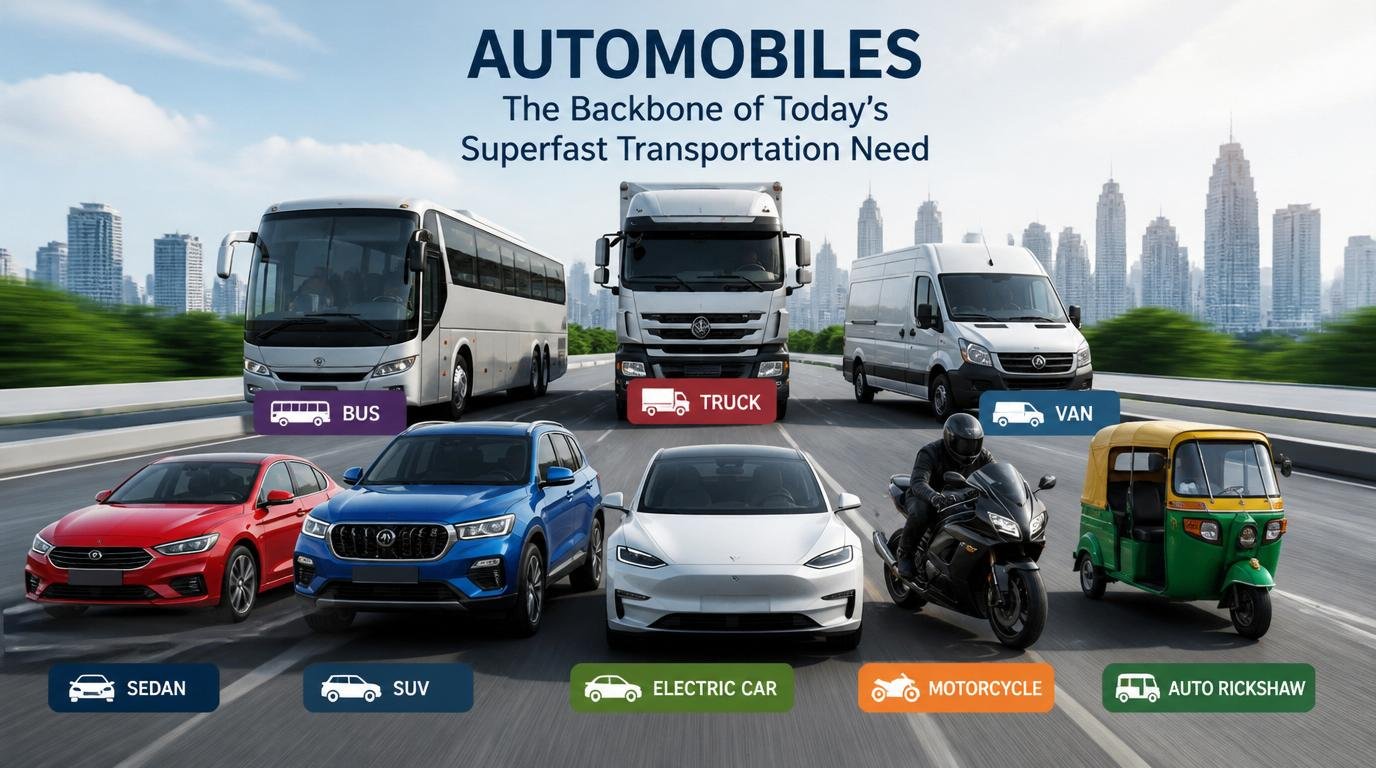
Automobiles: The Backbone of Today’s Superfast Transportation Need
Introduction
In the modern world, speed, connectivity, and mobility define progress. From daily commuting and industrial logistics to tourism and emergency services, automobiles have become an inseparable part of human civilization. They are not merely machines used for transportation; they are the driving force behind economic growth, technological advancement, and social development.
Automobiles have transformed how people travel, work, trade, and communicate. Whether it is a compact city car, a powerful truck carrying goods across nations, a luxury SUV, or an electric scooter navigating crowded urban roads, every automobile plays a critical role in fulfilling the ever-growing transportation needs of society.
Today’s superfast lifestyle demands transportation systems that are efficient, reliable, comfortable, and technologically advanced. Automobiles satisfy these demands by offering flexibility, speed, convenience, and accessibility unlike any other mode of transport.
What is an Automobile?
An automobile is a self-propelled vehicle designed primarily for transporting people or goods on roads. The word “automobile” comes from two words:
- “Auto” meaning self
- “Mobile” meaning moving
Thus, an automobile is a vehicle capable of moving by itself without external power.
Automobiles generally operate using:
- Internal combustion engines
- Electric motors
- Hybrid systems
- Alternative fuel technologies
Evolution of Automobiles
1. Early Stage
The earliest vehicles were steam-powered during the 18th century. However, they were large and inefficient.
2. Internal Combustion Era
The invention of gasoline and diesel engines revolutionized transportation. Inventors like Karl Benz and Henry Ford transformed the automobile industry.
Key developments included:
- Mass production
- Affordable cars
- Better road networks
- Faster transportation
3. Modern Era
Modern automobiles now feature:
- Artificial intelligence
- GPS navigation
- Autonomous driving
- Electric propulsion
- Smart safety systems
- Internet connectivity
Importance of Automobiles in Modern Transportation
1. Fast Transportation
Automobiles reduce travel time significantly. People can travel long distances within hours instead of days.
2. Economic Growth
The automobile industry contributes massively to:
- Employment
- Manufacturing
- Trade
- Tourism
- Infrastructure development
3. Personal Convenience
Cars and motorcycles provide:
- Freedom of movement
- Flexible travel schedules
- Door-to-door transportation
4. Industrial Support
Heavy vehicles transport:
- Raw materials
- Industrial machinery
- Consumer goods
- Agricultural products
5. Emergency Services
Ambulances, fire trucks, and rescue vehicles save countless lives daily.
Major Categories of Automobiles
Automobiles are classified based on purpose, fuel type, size, design, and usage.
1. Passenger Vehicles
Passenger vehicles are designed mainly to transport people.
Types of Passenger Vehicles
A. Hatchback Cars
Small vehicles with:
- Compact design
- Rear door opening upward
- Better fuel efficiency
Features
- Affordable
- Easy city driving
- Low maintenance
Examples
- Maruti Suzuki Swift
- Hyundai i20
B. Sedan Cars
Sedans offer:
- Separate luggage compartment
- Comfortable seating
- Premium appearance
Features
- Smooth driving experience
- Better aerodynamics
- Spacious interiors
Examples
- Honda City
- Toyota Camry
C. SUVs (Sports Utility Vehicles)
SUVs combine:
- Power
- Comfort
- Off-road capability
Features
- High ground clearance
- Powerful engines
- Large interiors
Examples
- Mahindra Scorpio
- Toyota Fortuner
D. MUVs (Multi Utility Vehicles)
Designed for larger families and group travel.
Features
- Multiple seating rows
- High passenger capacity
- Comfortable long-distance travel
Examples
- Toyota Innova
- Kia Carens
E. Luxury Cars
Luxury automobiles focus on:
- Premium comfort
- Advanced technology
- High performance
Examples
- Mercedes-Benz S-Class
- BMW 7 Series
2. Commercial Vehicles
Commercial vehicles transport goods and passengers for business purposes.
Types
A. Trucks
Used for transporting:
- Heavy goods
- Industrial products
- Construction materials
Categories
- Light trucks
- Medium trucks
- Heavy trucks
B. Buses
Public transportation vehicles carrying large numbers of passengers.
Types
- City buses
- School buses
- Tourist buses
- Electric buses
C. Delivery Vans
Used for:
- Courier services
- E-commerce logistics
- Food delivery
3. Two-Wheelers
Highly popular due to affordability and fuel efficiency.
Types
A. Motorcycles
Designed for:
- Speed
- Long-distance travel
- Performance riding
Examples
- Royal Enfield Classic 350
- Yamaha R15
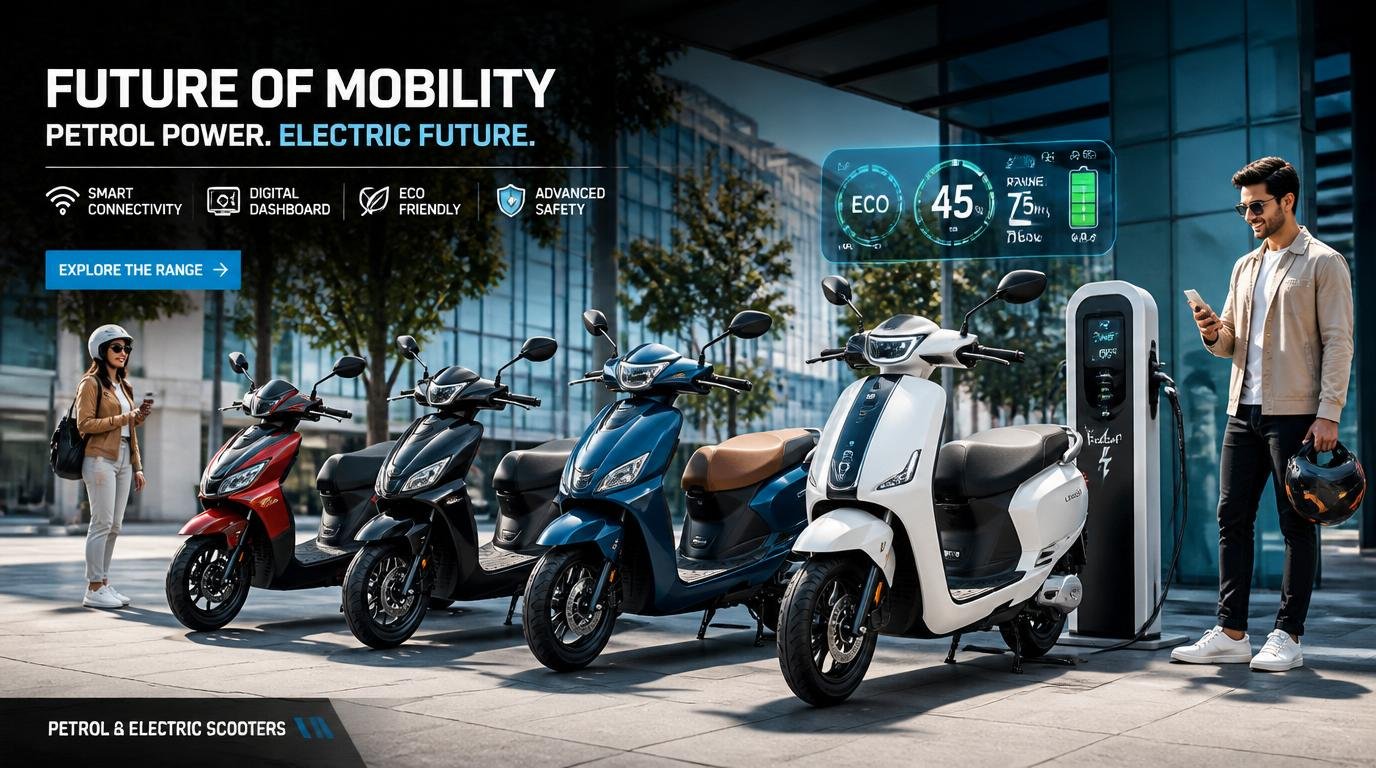
B. Scooters
Ideal for city commuting.
Features
- Automatic transmission
- Easy handling
- Good mileage
Examples
- Honda Activa
- TVS Jupiter
4. Three-Wheelers
Used mainly for:
- Public transport
- Cargo delivery
Examples
- Auto-rickshaws
- Cargo rickshaws
5. Electric Vehicles (EVs)
Electric vehicles are transforming modern transportation.
Advantages
- Zero tailpipe emissions
- Lower running cost
- Eco-friendly operation
- Reduced noise pollution
Types of EVs
A. Battery Electric Vehicles (BEVs)
Operate entirely on batteries.
B. Hybrid Electric Vehicles (HEVs)
Use both:
- Fuel engine
- Electric motor
C. Plug-in Hybrid Vehicles (PHEVs)
Can be charged externally.
Examples
- Tesla Model 3
- Tata Nexon EV
Main Components of an Automobile
Every automobile consists of several interconnected systems.
1. Engine
The engine is the heart of an automobile.
Types of Engines
- Petrol engine
- Diesel engine
- Electric motor
- Hybrid engine
Functions
- Generates power
- Converts fuel energy into mechanical energy
2. Transmission System
Transfers power from engine to wheels.
Types
- Manual transmission
- Automatic transmission
- CVT transmission
3. Chassis
The structural framework of the vehicle.
Functions
- Supports all components
- Provides strength and stability
4. Suspension System
Absorbs shocks from uneven roads.
Importance
- Improves comfort
- Enhances vehicle stability
5. Braking System
Controls and stops the vehicle safely.
Types
- Disc brakes
- Drum brakes
- ABS (Anti-lock Braking System)
6. Steering System
Helps control vehicle direction.
Modern Technologies
- Power steering
- Electronic steering
7. Electrical System
Includes:
- Battery
- Lights
- Sensors
- Infotainment systems
8. Tires and Wheels
Provide:
- Road grip
- Vehicle balance
- Motion support
Fuel Types Used in Automobiles
1. Petrol
Common in passenger vehicles.
Advantages
- Smooth performance
- Lower noise
2. Diesel
Used in:
- Trucks
- Buses
- Heavy vehicles
Advantages
- Better fuel economy
- Higher torque
3. Electricity
Used in EVs.
Benefits
- Clean energy
- Lower pollution
4. CNG (Compressed Natural Gas)
Popular for economical transportation.
Advantages
- Cheaper fuel
- Reduced emissions
5. Hydrogen Fuel
Emerging future technology.
Features
- Zero harmful emissions
- High efficiency
Advanced Technologies in Modern Automobiles
1. Autonomous Driving
Self-driving systems use:
- Sensors
- Cameras
- Artificial intelligence
2. Connected Cars
Vehicles connected through internet systems.
Features
- Real-time navigation
- Remote monitoring
- Voice assistance
3. Smart Safety Systems
Examples
- Lane assist
- Adaptive cruise control
- Collision warning
- Automatic emergency braking
4. Artificial Intelligence
AI improves:
- Traffic management
- Driver assistance
- Fuel optimization
Role of Automobiles in Different Sectors
1. Agriculture
Used for:
- Transporting crops
- Farming equipment
- Rural connectivity
2. Healthcare
Ambulances ensure rapid medical assistance.
3. Defense
Military vehicles support:
- Troop movement
- Security operations
- Logistics
4. Tourism
Tourist vehicles improve:
- Accessibility
- Travel comfort
- Tourism growth
Environmental Impact of Automobiles
Although automobiles are highly useful, they also create environmental challenges.
Major Problems
1. Air Pollution
Vehicle emissions release:
- Carbon dioxide
- Nitrogen oxides
- Smoke particles
2. Noise Pollution
Heavy traffic creates sound pollution.
3. Fuel Consumption
Fossil fuels are limited natural resources.
Solutions for Sustainable Transportation
1. Electric Vehicles
Reduce dependence on fossil fuels.
2. Public Transportation
Encourages fewer private vehicles.
3. Green Fuels
Use of:
- Biofuels
- Hydrogen
- Renewable energy
4. Smart Traffic Management
Reduces traffic congestion and fuel wastage.
Future of Automobiles
The future automobile industry will focus on:
- Autonomous driving
- Fully electric mobility
- Sustainable energy
- Smart transportation systems
- AI-powered vehicles
Emerging technologies will make transportation:
- Faster
- Safer
- Cleaner
- More efficient
Advantages of Automobiles
Major Benefits
- Faster transportation
- Convenience
- Economic development
- Industrial growth
- Employment generation
- Better connectivity
Disadvantages of Automobiles
Major Drawbacks
- Traffic congestion
- Pollution
- Road accidents
- Fuel dependency
- Maintenance cost
Conclusion
Automobiles are undoubtedly the backbone of today’s superfast transportation needs. They connect cities, industries, businesses, and people with unmatched speed and efficiency. From personal mobility to global logistics, automobiles play a central role in shaping modern civilization.
As technology continues to evolve, the automobile industry is moving toward smarter, safer, and environmentally friendly transportation systems. Electric vehicles, autonomous technology, and sustainable fuels represent the future of mobility.
Despite challenges such as pollution and traffic congestion, automobiles remain one of humanity’s greatest engineering achievements. Their contribution to economic growth, social development, and modern transportation is immeasurable.
In the coming decades, automobiles will continue to redefine mobility and remain a powerful symbol of progress, innovation, and human advancement.