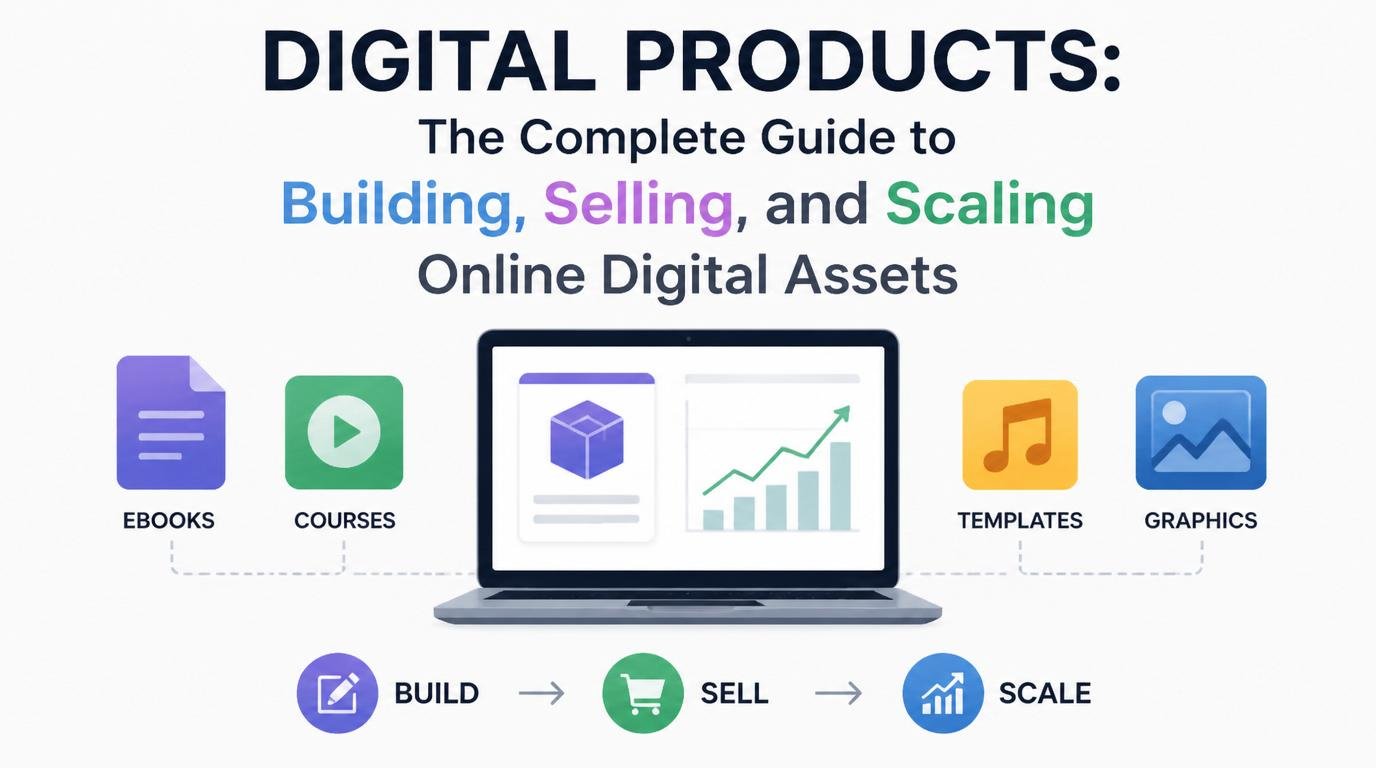
Digital Products: The Complete Guide to Building, Selling, and Scaling Online Digital Assets
The digital economy has transformed the way businesses operate, consumers shop, and creators generate income. Today, digital products have become one of the most profitable and scalable business models in the online world. Unlike physical goods, digital products can be created once and sold repeatedly without inventory, shipping, or manufacturing costs.
From eBooks and online courses to software applications and AI-powered tools, digital products are reshaping industries globally. Entrepreneurs, freelancers, creators, educators, and startups are increasingly adopting digital product businesses because of their low startup costs, high-profit margins, and global reach.
This comprehensive guide explores everything about digital products — their meaning, categories, business importance, monetization strategies, technologies involved, advantages, challenges, marketing methods, future trends, and how to start a successful digital product business.
What Are Digital Products?
Digital products are intangible products delivered electronically over the internet. They exist in digital format and can be downloaded, streamed, accessed online, or used through cloud-based systems.
Unlike physical products, digital products do not require physical storage or shipping. Once created, they can be duplicated and distributed infinitely with minimal additional cost.
Examples include:
- eBooks
- Software applications
- Online courses
- Mobile apps
- Website themes
- Stock photos
- Digital templates
- Music files
- NFTs
- SaaS platforms
- AI tools
- Membership content
- Digital subscriptions
Digital products are often sold through websites, marketplaces, mobile apps, or subscription platforms.
Why Digital Products Are Growing Rapidly
The digital product industry is expanding due to several global technological and economic changes.
1. Internet Accessibility
High-speed internet and smartphone adoption have made digital products accessible worldwide.
2. Remote Work Culture
The rise of remote work increased demand for digital learning tools, productivity apps, cloud software, and virtual collaboration platforms.
3. Low Operational Costs
Digital products eliminate manufacturing and logistics expenses, increasing profit margins.
4. Passive Income Potential
Creators can earn revenue continuously from a product created once.
5. Scalability
A digital product can serve thousands or millions of users simultaneously.
6. Global Reach
Digital businesses can sell internationally without opening physical stores.
Major Types of Digital Products
Digital products exist in many forms. Each category serves different industries and customer needs.
1. eBooks
eBooks are digital books sold in PDF, EPUB, or Kindle formats.
Popular eBook Niches
- Self-help
- Business
- Technology
- Fitness
- Personal finance
- Cooking
- Education
- Marketing
Advantages
- Easy to create
- Low production cost
- High profit margin
- Suitable for personal branding
Business Model
Creators sell eBooks through:
- Personal websites
- Digital marketplaces
- Subscription services
- Affiliate partnerships
2. Online Courses
Online learning is one of the largest digital product industries.
Course Formats
- Video tutorials
- Live classes
- Recorded webinars
- Audio lessons
- Interactive training
Popular Course Niches
- Coding
- AI & Machine Learning
- Graphic design
- Language learning
- Finance
- Digital marketing
- Stock trading
Revenue Models
- One-time purchase
- Monthly subscription
- Premium certification
- Membership communities
3. Software and SaaS Products
Software-as-a-Service (SaaS) products dominate the modern digital economy.
Examples
- CRM software
- Accounting tools
- AI writing assistants
- Cloud storage systems
- Project management platforms
SaaS Characteristics
- Cloud-based
- Subscription-driven
- Continuous updates
- Scalable infrastructure
SaaS Revenue Models
- Freemium
- Subscription
- Enterprise licensing
- Usage-based pricing
4. Mobile Applications
Mobile apps are among the most consumed digital products globally.
Categories
- Gaming apps
- Productivity apps
- Fitness apps
- Finance apps
- Shopping apps
- Social networking apps
Monetization Methods
- In-app purchases
- Ads
- Premium subscriptions
- Paid downloads
5. Digital Templates
Templates help users save time and improve productivity.
Types of Templates
- Resume templates
- Website templates
- Social media templates
- Spreadsheet templates
- Presentation templates
Popular Platforms
- Canva
- Notion
- Figma
- PowerPoint
- WordPress
6. Digital Art and Graphics
Artists now sell creative assets digitally.
Products Include
- Logos
- Icons
- Illustrations
- Wallpapers
- Design packs
- Fonts
Customer Segments
- Businesses
- Agencies
- YouTubers
- Social media creators
- Web developers
7. Stock Media
Digital media marketplaces allow creators to monetize visual and audio assets.
Stock Product Types
- Photos
- Videos
- Sound effects
- Music tracks
- Drone footage
Industries Using Stock Assets
- Advertising
- Film production
- YouTube content
- Marketing agencies
8. Membership Content
Subscription-based communities are highly profitable digital businesses.
Examples
- Premium newsletters
- Exclusive tutorials
- VIP communities
- Paid forums
- Research reports
Benefits
- Recurring income
- Loyal customer base
- Predictable revenue
9. NFTs and Blockchain-Based Digital Products
Blockchain technology introduced ownership verification for digital assets.
NFT Product Examples
- Digital art
- Virtual land
- Gaming items
- Music ownership rights
Key Technologies
- Blockchain
- Smart contracts
- Cryptocurrency wallets
10. AI-Powered Digital Products
Artificial Intelligence is revolutionizing digital product creation.
AI Product Categories
- AI writing tools
- AI image generators
- Chatbots
- Voice synthesis tools
- AI coding assistants
Future Potential
AI products are expected to dominate future digital business ecosystems.
Categories of Digital Product Businesses
Digital product businesses can be classified based on their business models.
B2C (Business-to-Consumer)
Companies directly sell products to individual consumers.
Examples
- Online courses
- Mobile apps
- eBooks
- Streaming subscriptions
B2B (Business-to-Business)
Businesses provide digital solutions to other businesses.
Examples
- Enterprise SaaS
- Automation software
- CRM systems
- Cybersecurity tools
Creator Economy Businesses
Independent creators monetize audiences using digital products.
Platforms Used
- YouTube
- Blogging websites
- Patreon
- Newsletter subscriptions
Marketplace-Based Businesses
These businesses operate through digital marketplaces.
Examples
- App marketplaces
- Template stores
- Stock photo websites
- Digital download marketplaces
Technologies Behind Digital Products
Digital products rely heavily on advanced technologies.
1. Cloud Computing
Cloud infrastructure powers modern digital businesses.
Benefits
- Scalability
- Data storage
- Faster deployment
- Global accessibility
Popular Providers
- AWS
- Google Cloud
- Microsoft Azure
2. Artificial Intelligence
AI enhances personalization, automation, and analytics.
AI Applications
- Recommendation systems
- Predictive analytics
- Customer support automation
- Content generation
3. APIs and Integrations
APIs connect digital products with external services.
Examples
- Payment gateways
- Social login systems
- CRM integrations
- Email marketing automation
4. Blockchain Technology
Blockchain enables decentralized ownership and secure transactions.
5. Cybersecurity Systems
Security is critical for digital products.
Security Technologies
- SSL encryption
- Multi-factor authentication
- Secure payment processing
- Data protection systems
Importance of Digital Products in Modern Business
Digital products are now central to modern economic growth.
1. High Profit Margins
Once developed, digital products incur minimal distribution costs.
2. Scalability
Businesses can grow rapidly without major operational expansion.
3. Automation Potential
Digital businesses automate:
- Sales
- Customer onboarding
- Payments
- Marketing
- Delivery systems
4. Global Customer Reach
Digital products can be sold worldwide instantly.
5. Recurring Revenue Opportunities
Subscriptions generate stable monthly income.
6. Data-Driven Optimization
Digital businesses collect analytics to improve user experience and profitability.
Advantages of Selling Digital Products
Low Startup Investment
Many digital businesses start with minimal capital.
No Inventory Management
No warehousing or physical logistics required.
Instant Delivery
Products are delivered immediately after purchase.
Location Independence
Businesses can operate remotely from anywhere.
Easy Scaling
One product can serve unlimited customers.
Passive Income Opportunities
Revenue continues even when the creator is offline.
Challenges in the Digital Product Industry
Despite advantages, digital businesses face several challenges.
1. Market Competition
Popular niches often become saturated.
2. Piracy and Unauthorized Sharing
Digital products are easier to duplicate illegally.
3. Customer Trust Issues
New businesses must establish credibility.
4. Continuous Updates
Software and educational products require ongoing maintenance.
5. Technical Complexity
Building scalable digital systems requires expertise.
Best Niches for Digital Products
Some niches consistently generate high demand.
High-Growth Niches
- Artificial Intelligence
- Personal finance
- Health and wellness
- Digital marketing
- Remote work tools
- Business productivity
- Education technology
- Cybersecurity
- Gaming
- Creator tools
How to Create a Successful Digital Product
Step 1: Identify a Problem
Successful products solve real customer problems.
Step 2: Validate Market Demand
Use:
- Keyword research
- Surveys
- Competitor analysis
- Social media trends
Step 3: Choose a Business Model
Decide whether the product will be:
- Subscription-based
- One-time purchase
- Freemium
- Membership-driven
Step 4: Build the Product
Use appropriate technologies and platforms.
Step 5: Create Branding
Strong branding increases trust and recognition.
Step 6: Launch Marketing Campaigns
Promote using:
- SEO
- Content marketing
- Social media
- Paid ads
- Influencer marketing
Step 7: Optimize Using Analytics
Track:
- Customer retention
- Conversion rates
- Engagement
- Revenue growth
Marketing Strategies for Digital Products
SEO (Search Engine Optimization)
SEO helps digital businesses gain organic traffic from search engines.
SEO Techniques
- Keyword optimization
- Technical SEO
- Content marketing
- Link building
Email Marketing
Email remains one of the highest-converting marketing channels.
Social Media Marketing
Platforms like Instagram, YouTube, LinkedIn, and TikTok drive digital product sales.
Affiliate Marketing
Affiliates promote products for commission-based earnings.
Influencer Collaborations
Creators with audiences help increase visibility and trust.
Paid Advertising
Businesses use:
- Google Ads
- Facebook Ads
- YouTube Ads
- Native advertising
Revenue Models for Digital Products
One-Time Sales
Customers purchase once for lifetime access.
Subscription Model
Users pay recurring monthly or yearly fees.
Freemium Model
Basic access is free while premium features require payment.
Licensing
Businesses pay to legally use software or content.
Advertising Revenue
Free products monetize through ads.
Future of Digital Products
The future of digital products is highly promising.
AI-Driven Personalization
AI will create highly customized user experiences.
Virtual and Augmented Reality
VR and AR will create immersive digital environments.
Decentralized Ownership
Blockchain technology may redefine ownership rights.
Creator Economy Expansion
More individuals will build independent digital businesses.
Automation and No-Code Development
No-code tools will enable non-technical creators to build products.
Digital Product Trends in 2026 and Beyond
Major Emerging Trends
- AI-generated products
- Voice-based applications
- Interactive learning platforms
- Subscription ecosystems
- Cloud-native software
- Digital communities
- Micro SaaS businesses
- Personalized automation tools
Best Platforms to Sell Digital Products
General Platforms
- Shopify
- Gumroad
- Sellfy
- Etsy
- WooCommerce
Course Platforms
- Teachable
- Udemy
- Kajabi
Software Platforms
- App marketplaces
- SaaS websites
- Cloud platforms
Tips for Long-Term Success
Focus on Customer Experience
Satisfied users drive retention and referrals.
Build an Email List
Email audiences create stable long-term revenue.
Continuously Update Products
Fresh updates improve competitiveness.
Diversify Revenue Streams
Offer multiple digital products together.
Build a Brand
Strong branding increases authority and trust.
Conclusion
Digital products have become one of the most powerful business opportunities in the modern online economy. Their scalability, profitability, automation potential, and global reach make them attractive for entrepreneurs, creators, startups, and enterprises alike.
Whether it is eBooks, SaaS software, AI tools, online courses, templates, or subscription communities, the digital product ecosystem continues to expand rapidly with technological advancements.
Businesses that understand customer needs, embrace innovation, and invest in quality digital experiences can build sustainable long-term success in the digital marketplace.
As artificial intelligence, cloud computing, automation, and creator-focused platforms continue to evolve, the future of digital products will become even more dynamic, personalized, and globally interconnected.
For anyone looking to start an online business in 2026 and beyond, digital products remain one of the smartest and most scalable opportunities available.