The Ultimate Guide to Air Fryers: Technology, Working Principle, Benefits, Safety & Future Innovations
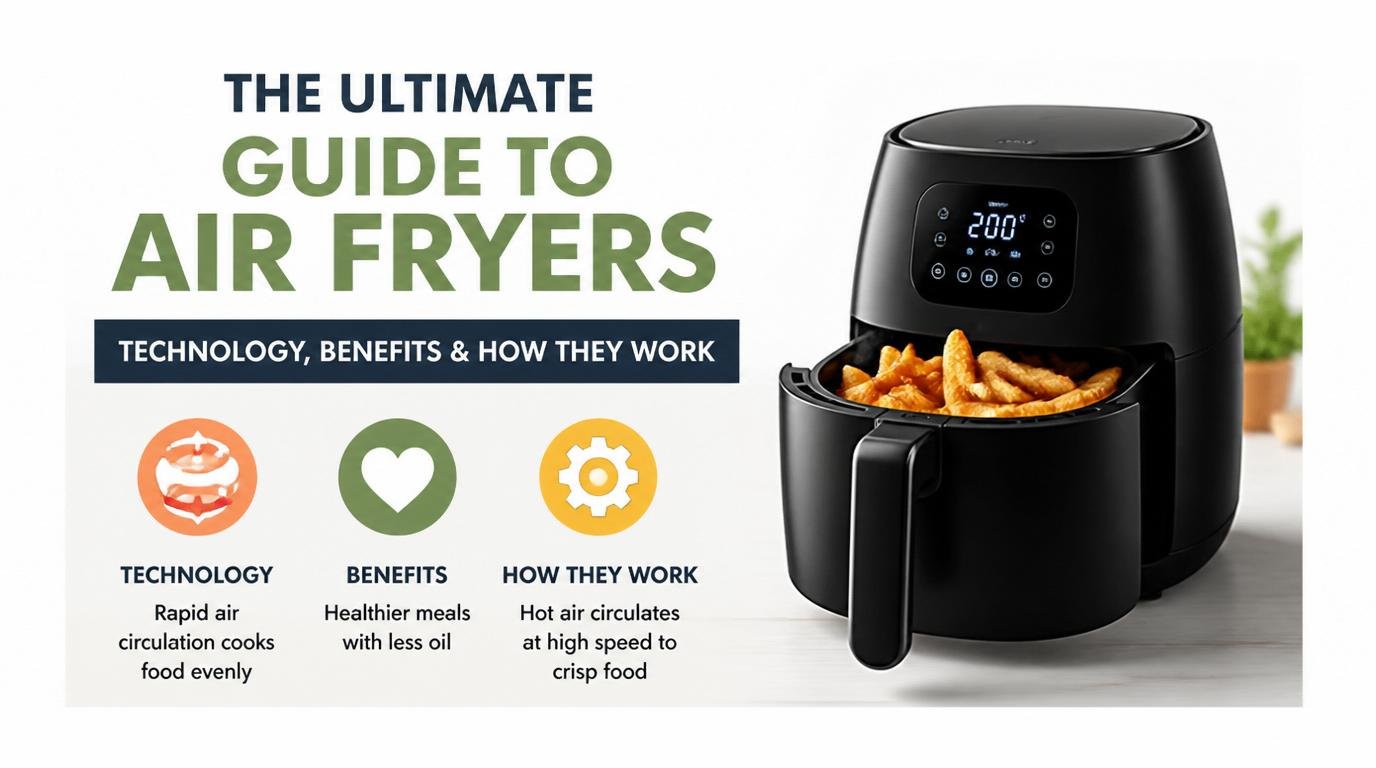
Air fryers have transformed modern kitchens by offering a healthier alternative to deep frying without sacrificing crispiness and flavor. What started as a compact kitchen appliance has evolved into a sophisticated cooking system powered by rapid air circulation technology, smart sensors, precision heating systems, and digital cooking algorithms.
In this complete guide, you’ll learn everything about air fryers — from the internal technology and engineering behind them to cooking science, safety, maintenance, advantages, disadvantages, and future innovations.
What Is an Air Fryer?
An air fryer is a high-speed convection cooking appliance designed to cook food using rapidly circulating hot air instead of submerging food in oil.
Despite the name “air fryer,” the appliance does not actually fry food in the traditional sense. Instead, it creates a crispy texture through:
- Rapid hot air circulation
- High-temperature heating elements
- Moisture evaporation
- Surface browning reactions
Modern air fryers can:
- Fry
- Roast
- Bake
- Grill
- Reheat
- Dehydrate
- Ferment
- Steam-cook (advanced models)
Most modern air fryers use 360-degree airflow systems and high-speed fans to distribute heat evenly around food.
The Core Technology Behind Air Fryers
1. Rapid Air Circulation Technology
The heart of every air fryer is rapid air circulation technology.
This system works similarly to a convection oven but in a much smaller and more efficient cooking chamber.
How It Works
Inside the appliance:
- A heating element generates high heat.
- A high-speed fan pushes hot air around the food.
- The compact chamber intensifies airflow.
- Hot air continuously strikes the food surface from multiple angles.
- Moisture evaporates quickly.
- The outer layer becomes crispy.
This creates the signature “fried” texture with minimal oil.
Internal Components of an Air Fryer
Heating Element
The heating element is usually positioned at the top.
Technologies Used:
- Electric resistance coil
- Quartz heating tube
- Infrared-coated steel heater
- PTC ceramic heater (advanced models)
The heating element converts electrical energy into thermal energy.
Advanced models combine:
- Top heating
- Bottom heating
- Infrared assistance
- Dual heating systems
Some smart air fryers now use top-and-bottom heating architecture for more even cooking.
High-Speed Fan System
The fan is one of the most critical technologies.
Fan Functions:
- Circulates hot air
- Removes moisture
- Maintains even temperature
- Eliminates cold spots
- Accelerates browning
Fan speeds may range from:
- 1800 RPM
- 2500 RPM
- Dual-speed intelligent systems
Modern air fryers automatically adjust fan speed according to temperature settings.
Airflow Engineering
Modern air fryers use advanced aerodynamic engineering.
Common Technologies:
- Cyclonic airflow
- Turbo airflow
- Coanda airflow systems
- Spiral heat distribution
- 360° vortex circulation
The goal is to ensure:
- Uniform cooking
- Crisp texture
- Reduced cooking time
Premium models include specially designed ducts and airflow channels to improve heat distribution.
The Science of Crispiness
Air fryers create crisp food through a combination of:
1. Moisture Removal
Hot air rapidly removes moisture from the food surface.
This dehydration process creates a dry outer layer that becomes crispy.
2. Maillard Reaction
The Maillard Reaction is a chemical reaction between:
- Amino acids
- Sugars
- Heat
This reaction creates:
- Browning
- Flavor
- Aroma
- Crunchy texture
It usually occurs above:
- 140°C to 165°C
Air fryers excel at producing this reaction efficiently.
3. Oil Micro-Coating
Even though air fryers use very little oil, a thin oil coating helps:
- Conduct heat
- Improve browning
- Enhance crunchiness
This is why completely oil-free cooking sometimes produces dry textures.
Types of Air Fryer Technologies
1. Basket Air Fryers
Most popular design.
Features:
- Compact
- Fast heating
- Excellent crisping
- Easy airflow concentration
Best For:
- Fries
- Nuggets
- Chicken wings
- Frozen foods
Basket models usually provide the crispiest results because of concentrated airflow.
2. Oven-Style Air Fryers
These resemble mini ovens.
Features:
- Multiple racks
- Large capacity
- Rotisserie support
- Multi-layer cooking
Limitations:
- Slightly weaker airflow
- Larger heating chamber
- Less concentrated crisping
3. Dual-Basket Air Fryers
These use:
- Two cooking zones
- Independent temperature control
- Sync cooking systems
Perfect for:
- Simultaneous cooking
- Large families
- Meal preparation
4. Steam Air Fryers
Newest innovation in air frying.
These combine:
- Steam injection
- Hot air cooking
Benefits:
- Juicier food
- Better moisture retention
- Reduced dryness
Some advanced models use superheated steam systems inspired by professional combi ovens.
Smart Technology in Modern Air Fryers
Air fryers are becoming increasingly intelligent.
Smart Features Include:
Wi-Fi Connectivity
Allows:
- Remote cooking
- App control
- Smart recipes
- Notifications
AI Cooking Presets
Modern air fryers use pre-programmed cooking algorithms.
Digital Temperature Sensors
Monitor internal temperature continuously.
Auto Pause Systems
Basket removal automatically pauses cooking.
Smart Scheduling
Some models support:
- 24-hour scheduling
- Delayed cooking
- Automated cooking stages
Temperature Control Technology
Modern air fryers use advanced thermal management systems.
Temperature Range
Typical range:
- 40°C to 200°C
Low temperatures:
- Dehydration
- Yogurt
- Fermentation
- Defrosting
High temperatures:
- Crisping
- Roasting
- Frying
Advanced systems combine:
- Smart sensors
- PID controllers
- Dynamic fan adjustment
This maintains stable temperatures throughout cooking.
Air Fryer Cooking Modes
Modern air fryers support multiple cooking modes:
| Mode | Purpose |
|---|---|
| Air Fry | Crispy cooking |
| Roast | Meat & vegetables |
| Bake | Cakes & desserts |
| Grill | High-heat cooking |
| Reheat | Leftovers |
| Dehydrate | Fruits & herbs |
| Ferment | Yogurt & dough |
| Steam Fry | Moist cooking |
Advantages of Air Fryers
1. Healthier Cooking
Air fryers use:
- Up to 85–90% less oil
This reduces:
- Fat intake
- Calories
- Grease consumption
2. Faster Cooking
The compact chamber heats quickly.
Air fryers often cook:
- 20–30% faster than ovens
3. Energy Efficiency
Smaller cooking chambers require:
- Less electricity
- Less preheating time
4. Versatility
One appliance can replace:
- Oven
- Fryer
- Toaster
- Grill
- Dehydrator
5. Cleaner Cooking
Minimal oil means:
- Less splatter
- Less smoke
- Easier cleanup
Air Fryer Safety Technologies
Modern air fryers include:
Thermal Protection
Prevents overheating.
Auto Shutoff
Turns off automatically after cooking.
Cool-Touch Exterior
Protects users from burns.
Basket Lock Systems
Prevents accidental spills.
Overheat Sensors
Continuously monitor internal temperature.
Non-Stick Coating Technology
Most baskets use:
- PTFE coatings
- Ceramic coatings
- Silicone coatings
Advanced air fryers now offer:
- Glass baskets
- Stainless steel interiors
- Borosilicate cooking chambers
Some users prefer glass or stainless steel models to avoid concerns about coating wear over time.
Are Air Fryers Safe?
Yes, air fryers are generally safe when used correctly.
Key Safety Points
Non-Stick Coatings
Modern PTFE coatings are usually:
- BPA-free
- PFOA-free
Problems mainly occur if coatings are:
- Scratched
- Overheated
- Damaged
Acrylamide Formation
Like ovens and frying, air fryers can produce acrylamide when starchy foods are overcooked.
To reduce risk:
- Avoid burning food
- Cook to golden brown
- Use moderate temperatures
Common Air Fryer Mistakes
1. Overcrowding the Basket
This blocks airflow.
Result:
- Soggy food
- Uneven cooking
2. Skipping Preheating
Preheating improves:
- Crispiness
- Browning
- Texture
3. Using Too Much Wet Marinade
Excess moisture prevents crisping.
4. Constantly Opening the Basket
This disrupts:
- Heat stability
- Air circulation
Cleaning Technology & Maintenance
Modern air fryers include:
- Dishwasher-safe baskets
- Non-stick interiors
- Removable trays
- Grease separation systems
Best Cleaning Practices
- Avoid abrasive scrubbers
- Use soft sponges
- Clean after every use
- Remove grease buildup regularly
Proper cleaning improves:
- Airflow
- Heating efficiency
- Appliance lifespan
The Future of Air Fryer Technology
Air fryers are evolving rapidly.
Future Innovations Include:
AI Cooking Systems
Automatic food recognition and cooking adjustment.
Steam + Air Hybrid Systems
Better moisture retention.
Smart Food Sensors
Real-time internal food monitoring.
Camera-Based Cooking
Internal AI cameras for cooking analysis.
Voice Assistant Integration
Control through:
- Alexa
- Google Assistant
- Smart home systems
Health Analytics
Tracking:
- Calories
- Oil usage
- Nutritional information
Air Fryer vs Traditional Frying
| Feature | Air Fryer | Deep Frying |
|---|---|---|
| Oil Usage | Very low | Extremely high |
| Calories | Lower | Higher |
| Texture | Crispy | Very crispy |
| Cooking Speed | Fast | Fast |
| Cleanup | Easy | Messy |
| Health Impact | Better | Less healthy |
| Smell | Minimal | Strong oil smell |
Air Fryer vs Oven
| Feature | Air Fryer | Conventional Oven |
|---|---|---|
| Preheat Time | Very fast | Slow |
| Energy Efficiency | Higher | Lower |
| Capacity | Smaller | Larger |
| Crispiness | Better | Moderate |
| Cooking Speed | Faster | Slower |
Final Thoughts
Air fryers are no longer just trendy kitchen gadgets — they are highly engineered cooking systems built around:
- Rapid air technology
- Precision heat control
- Smart airflow engineering
- Digital cooking intelligence
Their ability to create crispy, flavorful food with minimal oil has made them one of the most important kitchen innovations of the modern era.
As technology advances, future air fryers will become even smarter, healthier, faster, and more efficient — combining AI, steam systems, smart sensors, and advanced cooking automation into a single appliance.
Whether you’re a health-conscious cook, a busy professional, or a kitchen technology enthusiast, understanding how air fryers work helps you unlock their full potential and cook better food every day.