Apple World: The All-in-One Ecosystem for Almost Everyone
Few technology companies have transformed modern life as deeply as Apple. What started as a computer company eventually evolved into a complete digital ecosystem covering smartphones, tablets, laptops, desktops, wearables, audio devices, entertainment systems, smart home products, cloud platforms, financial tools, and AI-powered experiences.
The real strength of Apple is not just individual products — it is how every device works together. An iPhone unlocks a Mac. AirPods instantly switch between devices. Apple Watch tracks health data while syncing with iPhone. iPad becomes a second Mac display. Photos, passwords, files, and messages stay synchronized through iCloud. The ecosystem creates a connected digital lifestyle where hardware, software, and services operate almost seamlessly.
This deep guide explores nearly every major Apple product category, including specifications, technologies, design philosophy, ecosystem advantages, and how each product fits into modern life.
The iPhone Lineup
The iPhone is Apple’s most influential product and the center of its ecosystem. Over the years, the iPhone evolved from a communication device into a professional camera, gaming machine, entertainment hub, productivity tool, payment wallet, AI assistant, and portable computer.
Core iPhone Philosophy
Apple designs iPhones around five priorities:
- Premium build quality
- Powerful silicon chips
- Long software support
- Advanced cameras
- Deep ecosystem integration
Modern iPhones use aerospace-grade aluminum or titanium frames, Ceramic Shield front protection, OLED displays, and Apple-designed processors that consistently rank among the fastest mobile chips in the world.
iPhone Standard Models
The regular iPhone models target mainstream users who want flagship-level performance without ultra-premium pricing.
Typical Specifications
| Feature | Standard iPhone |
|---|---|
| Display | Super Retina XDR OLED |
| Size | 6.1-inch |
| Refresh Rate | 60Hz |
| Processor | A-series Apple Silicon |
| Cameras | Dual-camera system |
| Battery | All-day battery life |
| Charging | USB-C fast charging |
| Security | Face ID |
| Connectivity | 5G, Wi-Fi 6E, Bluetooth |
Major Features
- Excellent battery optimization
- Computational photography
- Cinematic video recording
- Dynamic Island interface
- AI-assisted photo processing
- Emergency SOS via satellite
- MagSafe accessories ecosystem
For most users, the standard iPhone delivers more than enough power for gaming, photography, video editing, social media, streaming, and work.
iPhone Pro Models
The Pro lineup represents Apple’s most advanced smartphone engineering.
Premium Specifications
| Feature | Pro Models |
|---|---|
| Body Material | Titanium |
| Display | LTPO OLED ProMotion |
| Refresh Rate | 1Hz–120Hz |
| Cameras | Triple-lens professional system |
| Zoom | Advanced optical zoom |
| Recording | ProRes & LOG video |
| Processor | Pro-class A-series chip |
| GPU | Hardware ray tracing |
| Storage | Up to 1TB |
Camera System
The Pro camera system is among the strongest reasons professionals choose iPhones.
Main Wide Lens
- Large sensor for low-light photography
- Sensor-shift stabilization
- High-resolution image capture
Ultra-Wide Lens
- Macro photography
- Landscape and architecture shots
Telephoto Lens
- Optical zoom
- Portrait photography
- Sports and wildlife shooting
Video Features
Apple heavily focuses on cinematic video production.
Key technologies include:
- 4K Dolby Vision recording
- Action Mode stabilization
- Spatial video
- Cinematic Mode
- ProRes workflows
Many content creators now shoot commercial-grade footage entirely on iPhones.
iPhone Software Experience
The iPhone runs iOS, one of the most optimized mobile operating systems.
iOS Features
- Focus modes
- Lock screen customization
- App privacy controls
- Live Activities
- Widgets
- AI-powered writing tools
- Password manager
- Family sharing
Apple also provides extremely long software support, often delivering updates for five to seven years.
The Mac Ecosystem
The Mac lineup transformed dramatically after Apple shifted from Intel processors to Apple Silicon chips.
This transition changed performance, battery life, thermal efficiency, and creative workloads.
MacBook Air
The MacBook Air is designed for portability and efficiency.
Design Philosophy
- Ultra-thin aluminum body
- Fanless silent design
- Long battery life
- Lightweight portability
Typical Specifications
| Feature | MacBook Air |
|---|---|
| Display | Liquid Retina |
| Processor | M-series chip |
| Battery Life | Up to 18+ hours |
| Weight | Around 1.2 kg |
| Memory | Unified memory architecture |
| Storage | SSD |
| Ports | USB-C / MagSafe |
Strengths
- Exceptional battery efficiency
- Instant wake
- Silent operation
- Excellent for students and office users
The MacBook Air became one of the most efficient mainstream laptops ever created after the arrival of Apple Silicon.
MacBook Pro
The MacBook Pro targets professionals including:
- Video editors
- Developers
- 3D artists
- Music producers
- Engineers
- AI researchers
Hardware Capabilities
High-End Specifications
| Feature | MacBook Pro |
|---|---|
| Display | Liquid Retina XDR |
| Brightness | Extreme HDR brightness |
| Refresh Rate | 120Hz ProMotion |
| Chips | M Pro / M Max / Ultra |
| RAM | Massive unified memory |
| GPU | High-performance integrated GPU |
| Battery | Industry-leading efficiency |
| Cooling | Advanced thermal systems |
Apple Silicon Advantages
Apple Silicon integrates:
- CPU
- GPU
- Neural Engine
- Memory controller
- Media engines
onto a single chip.
This architecture improves:
- Speed
- Power efficiency
- Thermal performance
- Video rendering
- AI tasks
iMac
The iMac combines a desktop computer and display into one elegant machine.
Features
- Thin colorful design
- 4.5K Retina display
- High-quality webcam
- Strong speakers
- Minimal cable clutter
The iMac targets:
- Families
- Students
- Offices
- Creative professionals
Mac Mini
The Mac Mini offers desktop-level power in a compact form factor.
Advantages
- Small footprint
- Powerful M-series chips
- Affordable entry into macOS
- Excellent server or studio machine
It became popular among developers and creators needing strong performance without purchasing a laptop.
Mac Studio
The Mac Studio is Apple’s professional desktop powerhouse.
Built for Extreme Workloads
Designed for:
- Hollywood editing
- 3D rendering
- Large-scale coding
- AI workloads
- Audio production
Professional Features
| Feature | Mac Studio |
|---|---|
| Processor | M Ultra / Max chips |
| Cooling | Advanced thermal architecture |
| Ports | Multiple Thunderbolt ports |
| Connectivity | 10Gb Ethernet |
| Media Engines | Multi-stream video acceleration |
Mac Pro
The Mac Pro is Apple’s highest-end workstation.
Enterprise-Class Capabilities
- Massive compute performance
- Expandability
- Rack-mounted options
- Studio production environments
It targets elite professional workflows where performance matters more than portability.
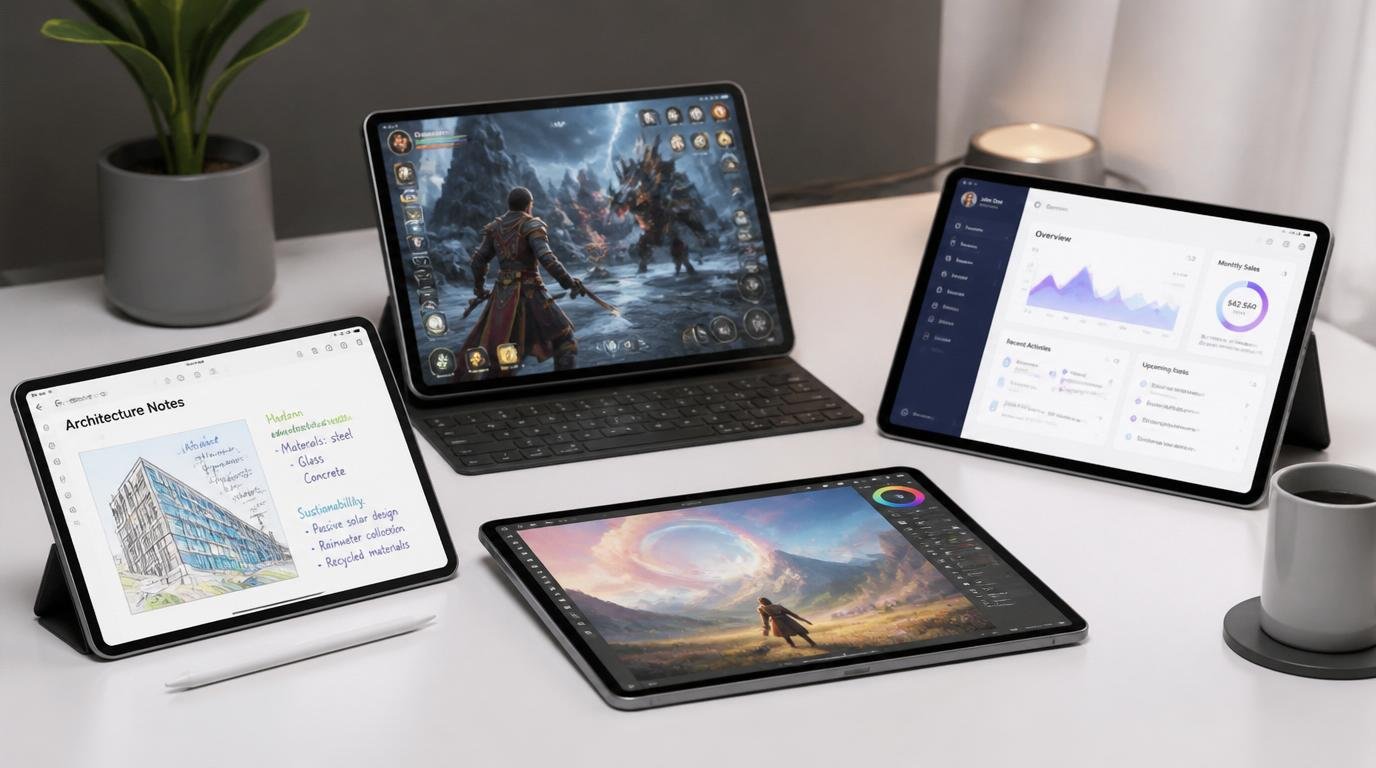
iPad Family
The iPad sits between the smartphone and laptop categories.
It evolved into:
- Creative tablet
- Note-taking device
- Portable workstation
- Gaming system
- Educational tool
Standard iPad
The base iPad focuses on affordability and versatility.
Ideal For
- Students
- Casual users
- Streaming
- Reading
- Web browsing
Features
- Large Retina display
- Apple Pencil support
- Long battery life
- Stereo speakers
iPad Air
The iPad Air balances portability and power.
Strengths
- Thin lightweight body
- M-series processors
- Strong multitasking
- Better displays
Many users consider it the best value in Apple’s tablet lineup.
iPad Pro
The iPad Pro is Apple’s most advanced tablet.
Professional Specifications
| Feature | iPad Pro |
|---|---|
| Display | OLED / ProMotion |
| Refresh Rate | 120Hz |
| Processor | M-series chips |
| Accessories | Magic Keyboard |
| Stylus | Apple Pencil Pro |
| Cameras | Pro-grade imaging |
Creative Use Cases
- Illustration
- Music creation
- Architecture
- Video editing
- Animation
Apple Pencil
The Apple Pencil transformed the iPad into a creative workstation.
Capabilities
- Pressure sensitivity
- Tilt recognition
- Low latency
- Handwriting conversion
- Precision sketching
Artists, students, and designers widely use it for digital workflows.
Apple Watch
The Apple Watch became one of the most successful wearable products ever created.
Its focus areas include:
- Health
- Fitness
- Safety
- Notifications
- Communication
Apple Watch Series
Core Features
| Feature | Apple Watch |
|---|---|
| Health Sensors | ECG, heart rate |
| Fitness Tracking | Workouts & rings |
| Connectivity | GPS / Cellular |
| Water Resistance | Swim capable |
| Display | Always-On Retina |
Health Technologies
- Blood oxygen tracking
- Sleep monitoring
- Heart rhythm alerts
- Fall detection
- Crash detection
The watch became highly important in preventive healthcare.
Apple Watch Ultra
The Ultra lineup targets adventurers and athletes.
Rugged Features
- Titanium body
- Larger battery
- Extreme brightness
- Action button
- Advanced GPS
Ideal for:
- Hiking
- Diving
- Endurance sports
AirPods Family
AirPods revolutionized wireless audio.
AirPods Standard
Features
- Instant pairing
- Spatial audio
- Voice isolation
- Automatic switching
They became popular because of simplicity and ecosystem integration.
AirPods Pro
Premium Audio Features
| Feature | AirPods Pro |
|---|---|
| Noise Cancellation | Active ANC |
| Audio | Adaptive audio |
| Fit | Silicone tips |
| Controls | Touch gestures |
| Audio Tech | Spatial Audio |
The AirPods Pro line competes with the best premium earbuds globally.
AirPods Max
Apple’s over-ear premium headphones focus on:
- High-fidelity sound
- Spatial audio
- Premium materials
- Noise cancellation
The stainless steel and aluminum construction gives them a luxury feel uncommon in mainstream headphones.
Apple Vision Pro
The Vision Pro introduced Apple’s vision for spatial computing.
Instead of traditional screens, users interact with digital interfaces in physical space.
Core Technologies
Specifications
| Feature | Vision Pro |
|---|---|
| Displays | Ultra-high resolution micro-OLED |
| Input | Eye tracking & gestures |
| Audio | Spatial audio |
| Processor | Dual-chip architecture |
| Cameras | Advanced spatial sensors |
Use Cases
- Immersive entertainment
- Virtual workspaces
- 3D media
- Spatial photography
- Productivity
Vision Pro represents Apple’s long-term ambition beyond traditional smartphones.
Apple TV
Apple TV evolved into both:
- Streaming hardware
- Entertainment platform
Features
- 4K HDR streaming
- Dolby Atmos audio
- Gaming support
- Apple Arcade integration
- Smart home control
The interface focuses on smooth performance and clean navigation.
HomePod
HomePod is Apple’s smart speaker family.
Audio Strengths
- Computational audio
- Room sensing
- Deep bass
- Spatial sound
HomePod also acts as a smart home hub for HomeKit devices.
AirTag
AirTag is Apple’s smart tracking accessory.
Capabilities
- Precision finding
- Find My network integration
- Replaceable battery
- Water resistance
People use AirTags for:
- Keys
- Bags
- Wallets
- Luggage
- Vehicles
Apple later improved AirTag range and findability in newer generations.
Apple Services Ecosystem
Apple increasingly earns revenue from services.
iCloud
iCloud synchronizes:
- Photos
- Files
- Passwords
- Notes
- Contacts
- Backups
It acts as the invisible backbone of the Apple ecosystem.
Apple Music
Apple Music competes directly with global music streaming services.
Features
- Lossless audio
- Dolby Atmos
- Massive music catalog
- Personalized playlists
Apple TV+
Apple’s streaming platform focuses on premium original productions.
The service became known for:
- Cinematic storytelling
- High-budget productions
- Award-winning series
Apple Arcade
Apple Arcade offers:
- Ad-free gaming
- Controller support
- Cross-device gaming
Apple Fitness+
Fitness+ integrates deeply with:
- Apple Watch
- iPhone
- iPad
- Apple TV
It provides guided workouts with real-time biometric tracking.
Apple Intelligence and AI
Apple increasingly integrates AI into:
- Writing tools
- Siri
- Photo editing
- Notifications
- Search
- Productivity
The company focuses heavily on:
- Privacy
- On-device AI
- Secure processing
Unlike many competitors, Apple emphasizes processing data locally instead of relying entirely on cloud servers.
Apple Silicon Revolution
Apple Silicon fundamentally changed computing performance.
Why It Matters
Advantages
- Unified memory
- Better efficiency
- Longer battery life
- Lower heat generation
- Strong AI acceleration
Apple’s chips now power:
- iPhones
- iPads
- Macs
- Vision devices
- Watches
This unified architecture creates ecosystem-level optimization rarely seen elsewhere.
The Strength of the Ecosystem
The true power of Apple products appears when devices interact together.
Ecosystem Features
Continuity
Start work on one device and continue on another.
AirDrop
Instant file sharing across devices.
Universal Clipboard
Copy on iPhone, paste on Mac.
Handoff
Continue apps seamlessly.
Sidecar
Use iPad as Mac display.
Auto Unlock
Apple Watch unlocks Mac automatically.
Find My Network
Track devices globally.
This interconnected experience is what keeps millions of users inside the Apple ecosystem for years.
Why Apple Dominates Premium Technology
Apple’s success comes from combining:
- Hardware engineering
- Software optimization
- Industrial design
- Ecosystem integration
- Brand trust
- Long-term support
Rather than competing only on specifications, Apple focuses on creating a complete user experience.
Final Thoughts
Apple is no longer simply a smartphone or computer manufacturer. It is an ecosystem company that touches nearly every part of modern digital life.
From iPhones and Macs to AirPods, Apple Watch, Vision Pro, iCloud, and AI-powered services, the company has built one of the most interconnected technology ecosystems ever created.
Its greatest achievement is not any single product. The real achievement is how all products work together — turning separate devices into one unified digital environment.
That is why Apple continues to attract students, creators, professionals, businesses, families, gamers, filmmakers, musicians, fitness enthusiasts, and everyday users across the world.